Thursday, November 19, 2015

Survey Results Are In: The Marketer’s View on Metrics & Priorities

First of all, a tremendous thanks to everyone who shared their feedback on our recent survey. We hope it’s the first of many discoveries we can share. We want our blog to cover the topics that you care about, so please share any suggestions in comments, in future surveys, or by email to blog@kissmetrics.com.

Here’s our top 5 surprises that we found from your responses:

  1. We are advocates. Some of the obvious findings are trends that most marketers know; word of mouth is important, especially with the advent of social. But we found that not only are our readers on the receiving side of word of mouth, you’re also the first to provide recommendations when you find a tool or product that works for you.
  2. Data visualization drives cross-business success. And while data visualization is a priority, it’s not because you need basic analytics. It’s because you are distributing your insights throughout your company as part of your goal to share value of your work. It’s directly linked to management support and shared confidence in results. The data visualization is key not just to internal communication for decisions, it’s appreciated across an organization to show business program value and articulate other top level issues. Sophisticated users are leaning on data visualization to prove tool value across the company.
  3. We all dig into the people details. Another correlation hinted that where organizations used analytics to make business decisions, consumer behavioral tracking was a key priority.
  4. Most analytics tools are complementary, not competitive. For blog readers, your favorite tool overall was Google Analytics, and of course Kissmetrics. We’ll definitely continue to write to those categories. We also saw a spread of social media tool mentions across ad and content applications.
  5. Everyone has their own favorite feature, but we all want them to connect. Your absolutely necessary feature set? That was an even wider gamut of response. Connections between systems is a recurring theme, as well as data visualization, funnel reports, and segmentation. Integrations and use of API to connect disparate systems work in tandem with data visualization to communicate across the business.

Does this sound like you? Is there anything we missed? As we continue to print the 3D model of what the analytical marketer looks like, we hope to hear from each of you.

About the Author: Maura Ginty is the VP of Marketing at Kissmetrics.

Wednesday, November 18, 2015

The Agile Marketing Framework RealtimeBoard Used to Acquire 675k Signups

The growing popularity of “growth hacking” has resulted in a lot of young startups that know a lot about hacks that give you quick wins, but cannot build long term success based on experiments.

But if you have a process, you can win in the long term and ‘hack’ continuously. Like a lot of companies that use agile methods to build successful products (we all know that it works!), marketers can implement agile for their growth process.

The agile marketing framework described in the article helped us acquire 675K signups while spending zero on user acquisition, and I’m happy to share some tips and tricks that any startup can use.

Agile Marketing: Number of Hacks vs Process

First, you should understand the difference between the number of hacks and process. You can find a lot of things on the Internet that promise you new audience (and they work). You can conduct 100 experiments per month (and some of them work), but the real goal is not implementation of all the possible hacks, the goal is the right product for the right audience and deliver it in the right time and place. We used to make a lot of experiments, but finally we understood that system of experiments gives us greater results. That’s why we decided to rebuild our marketing process and took some practices from our development team.

Step 1. Choose the right metrics

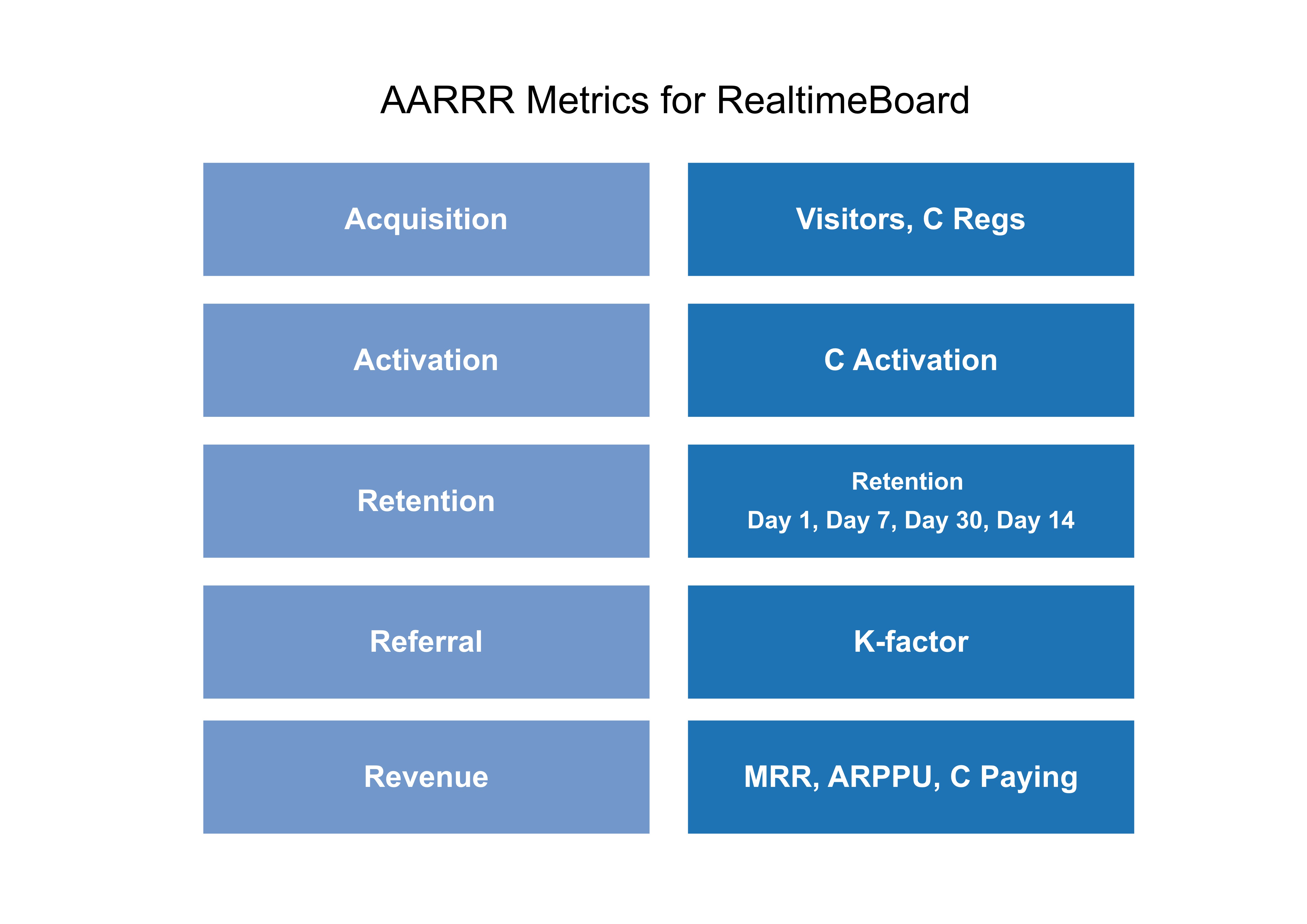
The goals should be measurable, that’s why before you start any process, you should choose the ruler to measure your success or failure. We are using AARRR metrics by Dave McClure as we think it describes our users’ path to success.

AARRR-Marketing

3 lessons learned:

  • Use services that can help you analyze your users behavior. We’ve implemented Kissmetrics after several months of product development, and that was a bit late – we were blind without data. Measure everything you can from the very beginning, this will help you take decisions based on data.
  • If you have something specific in your product, you can add a metric to measure. For example, as we are offering Free trial and have Free limited plan at the same time, we have included the number of trials in the AARRR funnel.
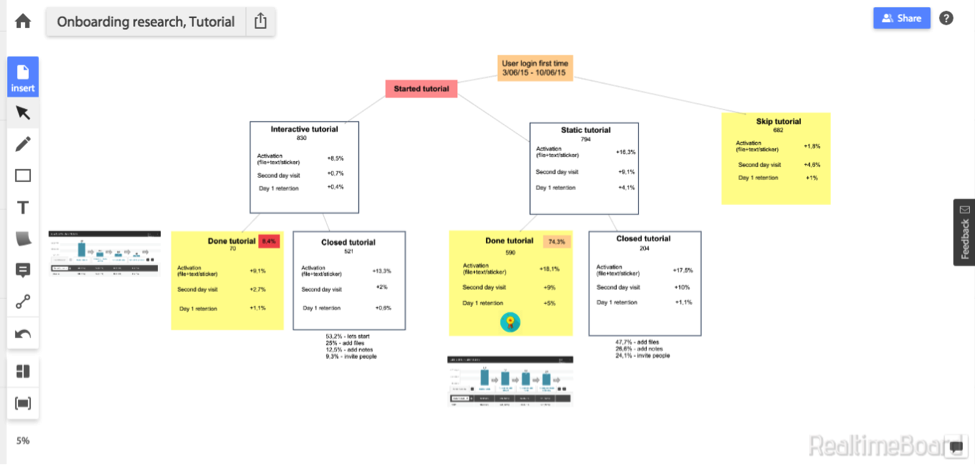
  • There is one metric that can be tricky to define – it’s Activation. It’s about so-called a-ha moment, but actually it cannot be simply measured. But you can see what your returned visitors did in the first session and then allow your inner Sherlock find the reasons and motivation. In our case we used Kissmetrics to analyze user actions that led to return and active usage. In the picture below you can see data about active usage of different features by returned and one-day users.

product-Activation-Research

Step 2. Define goals and rhythm

The first step of implementing agile marketing was defining our goals in terms of product metrics. For each AARRR letter we defined a quarterly goal. I.e. Q1 Retention: Increase Day 1 Retention by 15%.

But a quarter is a very long period of time for agile marketers, that’s why we defined a sprint time – it’s time for conducting a number of experiments, and at the end of each sprint we measure the results. It’s one week for us, but you can take more time if you need. The sprint length can be extended to a month and it depends on:

  • the number of members in your marketing and development teams (yes, some experiments need coding)
  • the time they need to conduct an experiment

Each week we have a meeting and discuss results, set goals and choose experiments for the next sprint. For remote team members we use online whiteboards and Google Docs, it helps us keep everybody on the same page. Trello and Sprintly are also good options.

Step 3. Build hypotheses

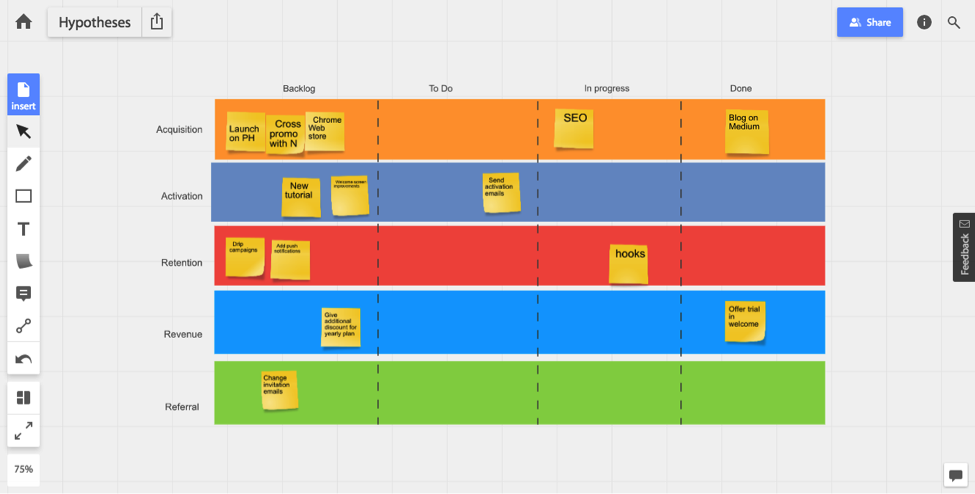
Every single article you read can inspire you do something with your product or marketing strategy. We add these ideas to our backlog – even crazy ones. After that we choose some of them for the future evaluation, but everyone in the team can contribute to our marketing backlog, which is divided into 5 sections that correspond to AARRR metrics. Here’s what our agile board looks like:

Agile-board

Step 4. Evaluate, prioritize and implement hypotheses – ICE Framework

Sean Ellis introduced amazing ICE Score framework that allows you evaluate all the hypotheses before you spend time and money on testing. It helps teams reduce costs significantly:

All you have to do is to ask yourself three questions:

  • What will the impact be if this works? (we measure it in percentage of growth of a metric)
  • How confident am I that this will work? (from 0 to 1)
  • How much time/money/effort is required? (from simple 5 to 1)

Hypotheses-evaluation

The hypotheses with the highest score go to To-Do section, that means we are working on them during the next sprint.

What if’s

  • What if I have an amazing idea in the middle of the sprint? Don’t start working on it right now – add to backlog. The team already has the number of hypotheses to test, don’t interrupt them.
  • What if we cannot achieve the result during the sprint? You usually can. Just do something that you can measure or touch, remove everything that is really not required.
  • What if the idea got the high score, but you don’t believe in that idea? Frameworks are great, but you should also follow your vision and base your decisions on empathy. That works for us.

Step 5. Test and analyze the results

When the experiment starts, we collect the data from different sources and visualize it on the board to make it visible for the whole team:

Metrics-analysis

I can’t say it enough – our life is impossible to imagine without testing. We tried many services, but due to several reasons our toolbox contains the following products nowadays.

Step 6. Repeat

The sprint ends with retrospective, the meeting where we discuss the results and plan the next sprint, where the steps from 3 to 5 are repeated. At the meeting each member of the team answers the following questions:

  • What worked well for us?
  • What did not work well for us?
  • What actions can we take to improve our process going forward?

It’s a very important part of agile marketing as it helps you remove the obstacles and improve the process. With every cycle you’ll have more practice and you’ll become more trained in agile marketing and spend less time and money on your experiments.

Conclusion

agile marketing is a great approach taken from software development, and it gives us an opportunity to make not just hacks but build the process of growth saving time and money on things that just do not work. The framework described above is not rigid though. Find your own rhythm, prioritize goals, test, analyze the results and improve your growth process from sprint to sprint.

About the Author: Anna Boiarkina is the Head of Marketing at RealtimeBoard, an online whiteboarding and collaboration service for teams. You can connect with me on LinkedIn.

Tuesday, November 17, 2015

How Brands Can Take Advantage of Snapchat (Infographic)

Sometimes it’s the craziest ideas that take off.

A social network where users send and read 140 character messages.

An app where users send the message “Yo” to one another.

And now we have Snapchat, an app that launched with a simple value proposition. Allow users to send pictures to each other that disappear after 10 seconds.

And now that idea has turned into a $10 billion company. But the product has evolved to become a more full-fledged social network.

If you think Snapchat is still used by a bunch of kids sending pictures to each other, it’s time to reevaluate. Here’s what you may have missed:

  • It launched features like Discover and Stories, which major brands like General Electric, Acura, Coca-Cola, CNN and National Geographic are using to connect with their fans.
  • There are over 100 million people using it everyday.
  • Its most active age demographic are the young adults between 18-24.

Now obviously Snapchat isn’t for everyone. If you’re a B2B marketer targeting high-level decision makers at corporations than Snapchat isn’t your best bet.

But if you’re selling to young consumers and looking for a new way to connect with them, Snapchat might be your new untapped outlet.

Today’s infographic outlines the reach of Snapchat, what brands are using it, how they are using it, and some tips for brands that are new to the platform.

As is the case with all communication tools, it’s important to avoid spamming your followers. The definition of spam differs for many people. For some it’s sending too many snaps, sending too many promotional snaps, or a combination of both.

Be selective in who you choose to run your Snapchat (and all social media accounts). These people carry the loudspeaker and are the voice for your brand and have a direct line to your customers and evangelists. Be sure they know what your brand is about and that it’s consistent with how you want it to be conveyed.

Snapchat Infographic

Brought to you by Social Marketing Software by Marketo

About the Author: Zach Bulygo (Twitter) is a Content Writer for Kissmetrics.

7 Copywriting Hacks Based in Psychology

Copywriting sometimes feels like one of those elusive skills that only the best of the best professionals truly possess.

They know how and what to write to increase conversions, and seem to have a magic wand they wave over words and turn into gold.

But wouldn’t it be nice if you had a few of their best copywriting hacks up your own sleeve?

Guess what? You can.

In this post, we’ll look at 7 psychology-based copywriting hacks that can get you that much closer to having a copywriting wand of your own.

1. Illusory Truth

The illusory truth effect helps our brain make decisions throughout the day, acting as a shortcut for the decision-making process so that our brains don’t get overloaded.

This psychological tactic gives weight to concepts and ideas that we hear over and over again. Thus, repeated ideas = greater accuracy, more truth.

Researchers conducted a survey that asked participants to rate how much they trusted a statement. Some statements were repeated multiple times, while others were stated only once. The study found that people consistently rated the repeated statements as more trustworthy in comparison to statements that were not.

In another study conducted by Hascher, Goldstein, and Toppino, participants saw 60 statements per session, within which 20 statements were repeated. These participants then rated their confidence in each statement on a scale of 1-7, with 1 being the lowest level of confidence, and 7 being the highest. Again, the repeated statements were rated as more trustworthy.
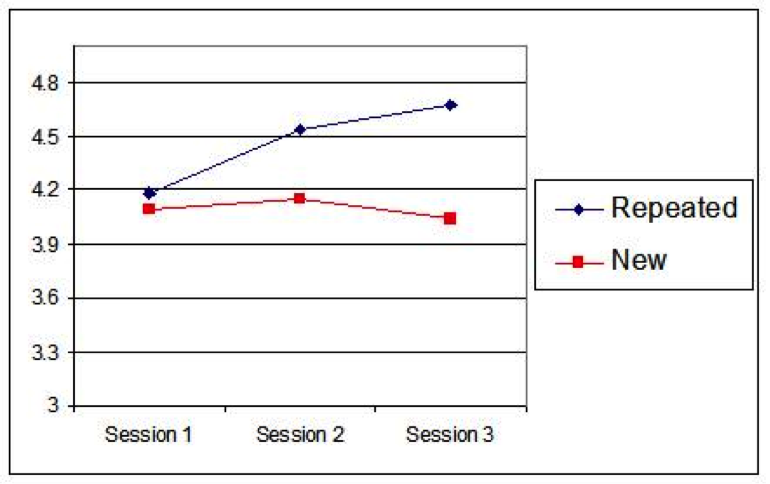
illusory-truth-study

Image Source

The takeaway: You know the old saying from Dale Carnegie, “Tell the audience what you’re going to say, say it; then tell them what you’ve said.” Within your copy, repeat the statements you most want your audience to believe and remember.

2. Rhyming

Rhyming gives copy a fun and quirky air, but who knew it also adds validity?

It’s true: A 2000 study conducted by McGlone and Tofighbakhsh at Lafayette College noted that poetic form impacted people’s perceptions of accuracy—specifically in relation to human behavior.

Here’s an example: When they tested the phrase “What sobriety heals, alcohol reveals” versus “What sobriety conceals, alcohol unmasks”, the rhyming version ranked as more accurate than the non-rhyming version.

The psychologists noted their findings indicated rhyme allowed statements to be processed more fluently in the human brain, which is sometimes perceived as truthfulness.

Look at how Jaguar used this tactic in its 1962 ad:
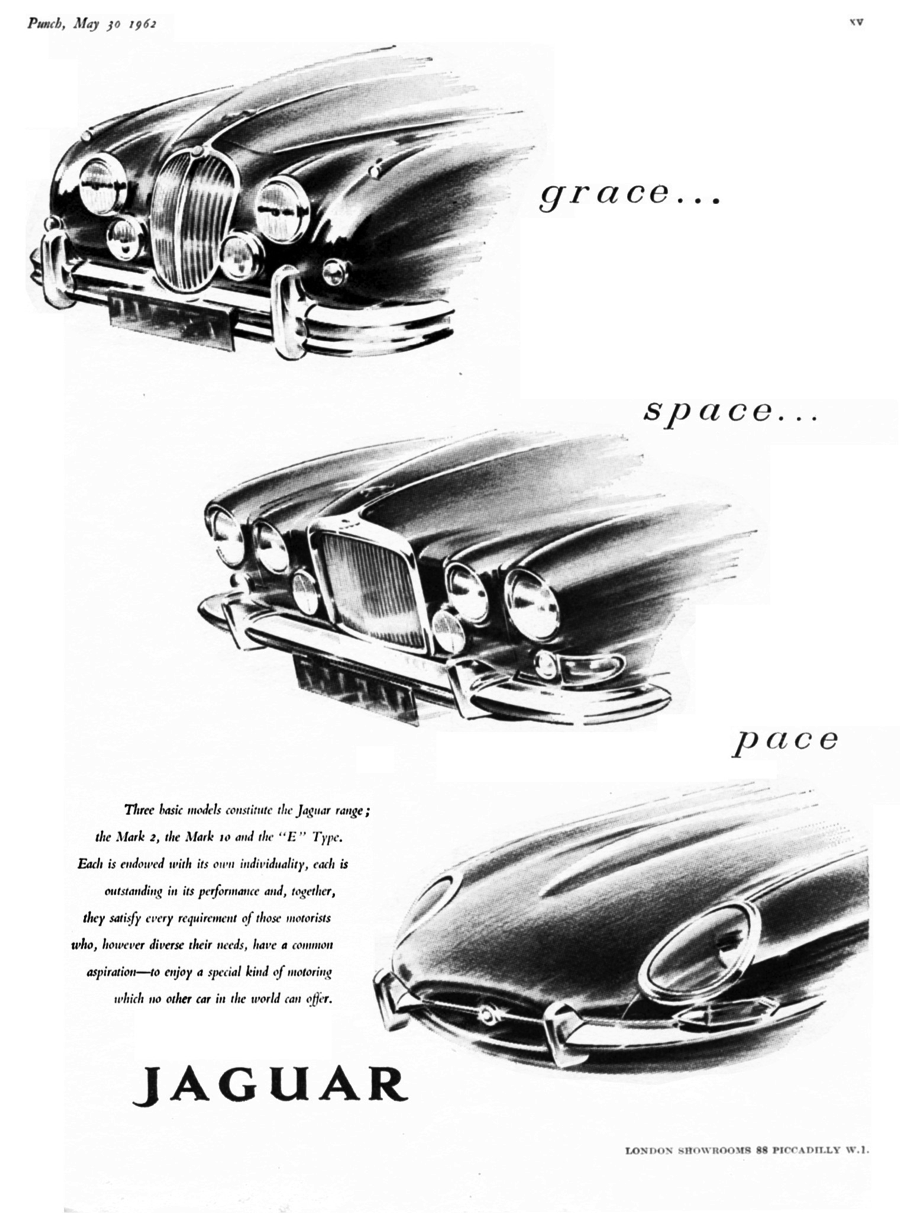
jaguar-1962-advertisement-rhyming

Image Source

The takeaway: The brain readily processes rhyming words and phrases, which sometimes means we view them as more truthful or accurate. Using rhymes in your copy adds a bit of eccentricity to your writing voice and can also make your claims appear more valid.

3. Serial Positioning

Knowing that online readers are scanning the text instead of consuming it word-for-word, we often use bullet points, short paragraphs, and lists to make content more consumable. But where information is placed within that format is something to consider.

Psychologists that have studied the serial position effect found that when participants hear a list of words and recall them immediately, they have higher accuracy with the words at the beginning and end of a series in comparison to those mid-list. This is known as primacy (for the first few words) and recency (for the words at the end of the list.)
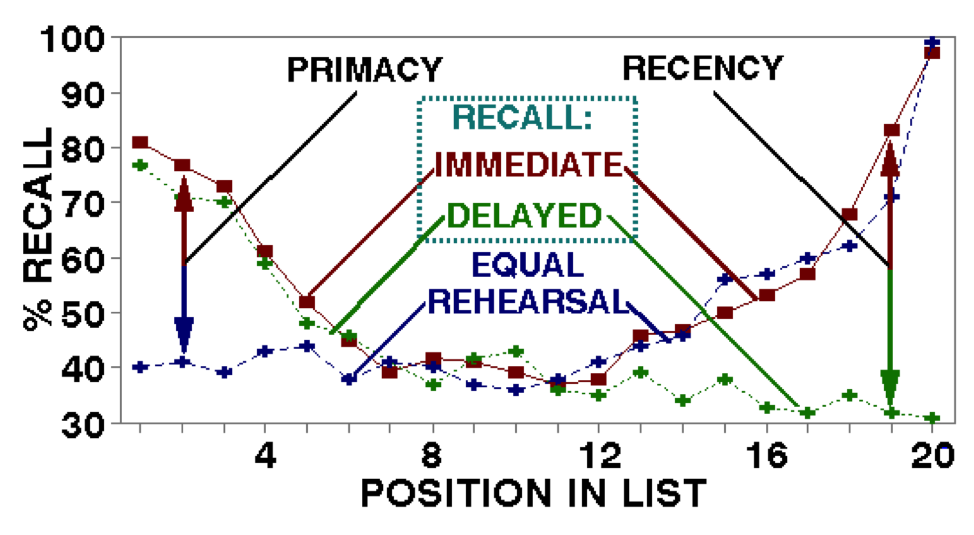
primacy-recency-serial-positioning-study

Image Source

The Takeaway: When writing copy, place the ideas you most care about the reader remembering at the beginning and end of a piece. Within an email context, this means your opening line and closing line are the two most valuable pieces of real estate.

4. Justification

A well-known study from 1978 illustrates the effect of using justification—maybe you’ve heard of it? It’s the Xerox line study.

In the experiment, people waiting in line to use the machine are studied as they react to people asking to jump the line. Those wanting to skip the line asked three different ways:

  1. 1. “Excuse me, I have five pages. May I use the Xerox machine, because I’m in a rush?”
  2. 2. “Excuse me, I have five pages. May I use the Xerox machine?”
  3. 3. “Excuse me, I have five pages. May I use the Xerox machine, because I have to make copies?”

For those who used #1, or “because I’m in a rush?” 94% of people agreed to allow them to do so. At the same time, 93% allowed a person to pass with response #3—which was seemingly devoid of a valid reason. In comparison, however, only 60% agreed to response #2, which lacked the word ‘because.’

Researchers like Ellen Langer of Harvard believe this happens because of mindlessness—which calls upon internal scripts that guide our actions and responses to different scenarios. It’s a sort of an autopilot mode that our brains use to made decisions within social contexts, possibly as an evolutionary survival tool. When we hear a trigger word like ‘because’, it helps us assign credit, blame, or reason, and then respond accordingly (even when the reason isn’t all that valid.)

The Takeaway: Because is a powerful word. When writing persuasive copy, include ‘because’ to reinforce that you have a valid reason for your request—whether it’s to sign up for a free trial, download a template, complete a form, etc.

5. But You Are Free

Reminding your readers that they have the freedom to choose is another strategy based in psychology that’s proven to have powerful persuasive powers. “But you are free” (BYAF) explicitly reminds the reader he or she is free to refuse a request.

Christopher Carpenter at Western Illinois University conducted a worldwide meta-analysis on this topic, which examined 42 different studies on BYAF with more than 22,000 participants.

His findings were dramatic: BYAF doubled the success rate for compliance when employed with participants in a non-sales context. Let me repeat that. Over 22,000 people were studied, and when BYAF was used, conversion rates doubled. DOUBLED! Magic words, don’t you think?

So, for example: Say you’re conducting an online survey. You could use BYAF by writing something like:

We’d be honored if you would share your insights on our 2015 homeowners survey, but you are free to pass on the opportunity as well.

The Takeaway: Remind your readers that they have the freedom to make a choice—no one is forcing them to act. This simple reminder goes a long, long way.

6. Leverage your P.S. Line

Remember how we talked about primacy and recency earlier? Well, using a P.S. line in your copy is another way you can tap into that recency effect.

Because it’s literally post-script, it’s the last message a reader sees upon reaching the bottom of the page—so we know it’s going to stand out.

Fundraising organizations have been using the P.S. tactic for years.

But, why? Ray Jutkins, a direct mail copywriter, noted that 79% of donors and prospects that open direct mail read the postscript first.
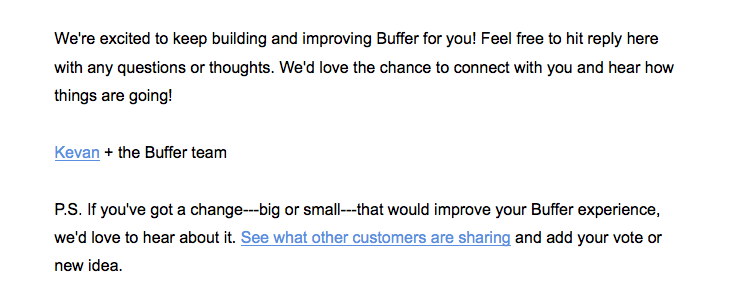
buffer-email-ps-line

This P.S. line includes a relevant CTA and encourages the reader to reply or offer feedback in another way–showing the company values the opinions of its users.

It seems we’ve come to understand the P.S. line as the most essential or important piece of long-form content, which is why a P.S. line is the place you should put your main call to action. For many, it’s the first (or only) place the eye goes when reading.

The Takeaway: When writing long-form content (like email, blog posts, direct mail, etc.) use a P.S. line to reinforce your main CTA.

7. Textural Adjectives

Krish Sathian at Emory University has conducted multiple studies on how textural adjectives activate the brain in a unique way. He’s found that using textural metaphors—things like “Having a rough day?” vs. “Having a bad day?” activated the brain’s sensory areas in very different ways.

fMRI data collected from those who were surveyed showed that activity jumped in the somatosensory cortex when a textural metaphor was used—but was quiet when literal meanings were used in their place.

There is still research to be done on how this brain activity directly relates to persuasion, but increased brain activity has been linked to memory and increased recall.

The Takeaway: Your copy should make good use of textural adjectives in place of commonly used colloquialisms. Think about how you can surprise your readers by inserting a texture-based word where they’re expecting a more bland, texture-less substitute.

Using Research for Smarter, More Effective Copy

Thanks to the psychology-based research each of these 7 copywriting hacks taps into, you can create more effective, conversion-oriented copy.

Don’t reinvent the wheel—look to the studies that have already shed light on what works and what doesn’t in terms of persuasion, memory, and conversion.

Who knows? You may find that doing something as simple as inserting a single word will dramatically increase the success of your written content.

About the Author: Kaleigh Moore is a social media consultant and copywriter who helps SaaS companies craft intelligent content with a charming human element. Visit her website or follow her on Twitter.

Friday, November 13, 2015

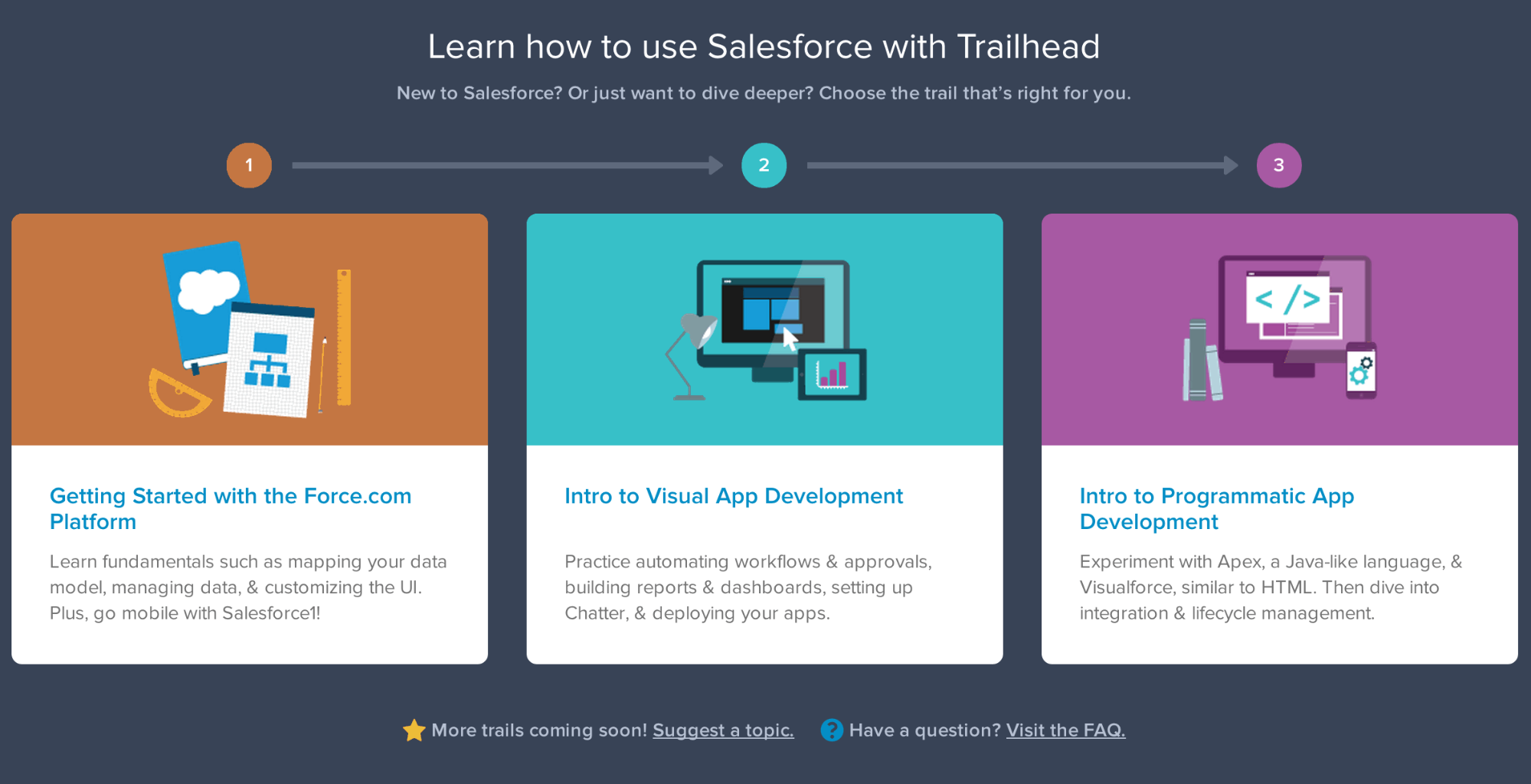
How to Unlock The True Power of Salesforce Using Trailhead

When Code Academy first came out in 2011, aspiring entrepreneurs everywhere couldn’t sign up quickly enough. “Learn to code interactively, for free” is the latest slogan on the homepage, and it couldn’t be more apt. I’m happy to be one of the 24 million+ users behind the brand who recognize its fantastic value proposition.

That’s why I was so surprised by the fun, user-friendly experience of Salesforce Trailhead. As a marketing consultant who works with Fortune 500s, and a Salesforce veteran, I work closely with Salesforce environments and help my clients use Salesforce more effectively. But I wasn’t expecting something as refreshing as Trailhead.

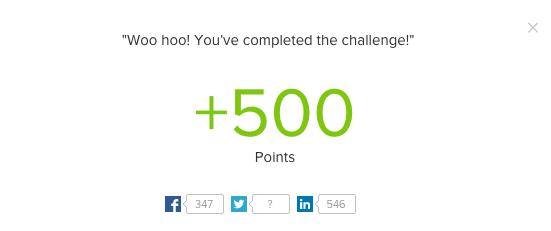
Trailhead is like Code Academy for Salesforce. Signing up for a developer environment is totally free. There are beginner, intermediate, and expert courses in both declarative and programmatic solutions. You can even earn points for completing challenges.

salesforce-trailhead-500-points

The ultimate goal of Trailhead is to transform how customers learn to use Salesforce, by radically simplifying and redefining the learning experience.

What Can You Do In Trailhead?

If your job involves managing databases, spreadsheets, or contact lists, you should be on Trailhead. It doesn’t matter whether you already know how to use Salesforce—Trailhead makes the learning experience fun and will teach you how to make apps that will greatly simplify your job.

If you do use Salesforce, you probably suspect that you aren’t leveraging it the way you could be. But you aren’t sure where to start learning, either. There are so many things you could learn. It probably seems easier to just make do with what you already know.

Let’s say you’re a B2B business owner hosting an event to build up your client base. You need get in touch with more CXOs and more stakeholders. You invite a lot of speakers, as well as your warmest leads and their friends at work. And then, in no time at all—it’s the day of the event.

If you’re like 99% of business owners out there today, you would rely on a traditional pen-and-paper signups to capture information from attendees. There’s nothing wrong with this approach, but chances are you’re already using Salesforce anyway. So why not impress your attendees with a simple app?

By using Trailhead’s declarative Schema Builder (a drag-and-drop flowchart that allows you to intuitively “program” without any programming knowledge), you can email each of your attendees a link to a survey that automatically populates Salesforce fields with their responses. You don’t need to know any programming to do this. And you could set this all up in less than one hour.

Check out the first lesson (Salesforce Platform Basics) to see what I mean. I completed it in a little under 20 minutes, and it taught me everything I needed to know to get started on an app similar to the one I just described. I even got 900 points and a nifty badge for completing the post-lesson challenge.

Following The Trail

salesforce-trailhead-illustration

Most of us already use Salesforce, but we find it intimidating. This shouldn’t be the way of things.

You don’t have to be a developer or a Salesforce admin to take advantage of what Trailhead has to offer. Anyone with a business and a client list could be supercharging their Salesforce experience with Trailhead and getting the best bang for their buck in 2015.

If you want to learn more about how Trailhead can modernize the way you use Salesforce, take a look at this helpful video from Adam Seligman at the 2015 Salesforce Developer Keynote.

About the Author: Alp Mimaroglu is a Marketing Luminary at Symantec. He specializes in marketing automation, demand generation, analytics, and marketing technology. Alp has extensive experience with both business and consumer marketing. He’s passionate about how technology is rapidly becoming the key to success in both the corporate sales and marketing landscapes. Follow Alp on LinkedIn and Twitter.

Thursday, November 12, 2015

6 Tips to Master the Facebook Power Editor

As a marketer, you probably already know that Facebook advertising has taken storm in the online world. And unless you jump on board you give your competition a huge leg up. So in order for you to really conquer Facebook advertising, you need to fully understand the Power Editor.

The Power Editor is a tool designed for larger advertisers who need to create lots of ads at once and have precise control of their campaigns.

Essentially, it’s a killer tool when it comes to social media marketing. Follow these 6 steps to master the Facebook Power Editor.

1. Know the Character Limit

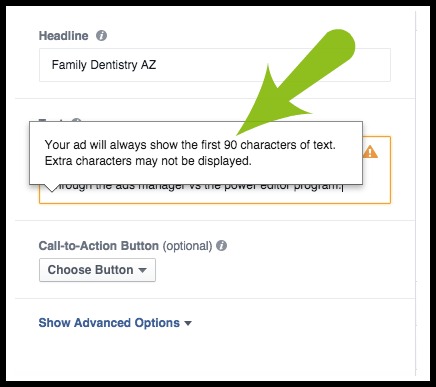
As you may know, the Ads Manager has quite a few restrictions when it comes to your ads, especially with text. You’re limited to only 90 characters.

facebook-editor-text-limitations

The Power Editor, though, gives you so much more freedom.

You have a significantly increased character limit, with 500 characters on desktop and 110 characters for mobile.

This is perfect for marketers and copywriters because it gives them more room to craft the perfect message.

2. Make Sure You Have Ad Basics Down First

In order to master the Facebook Power Editor, you need to first master ad basics.

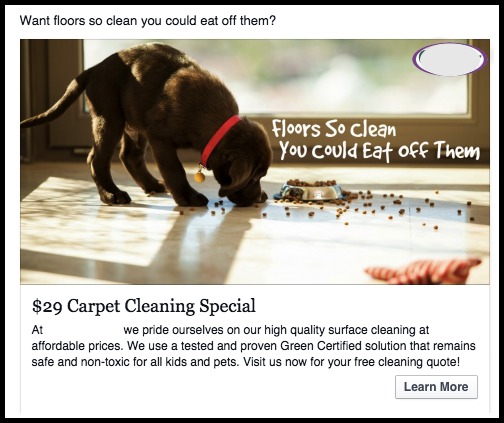
That means you need to understand just how important it is to use engaging images, catchy headlines, and strong CTAs that convert. So a great first step is to research other Facebook ads that have done really well. Here’s an example of one that we did for a client that got great results:

Facebook-ad-example

The catchy headline, “Want floors so clean you could eat off them?” along with the strong monetary offer of $29 carpet cleaning special caused this ad to bring in quality leads for our client. In less than a month, this campaign had already generated them 25 conversions.

3. Manage Your Page Posts/ Analytics Through the Editor

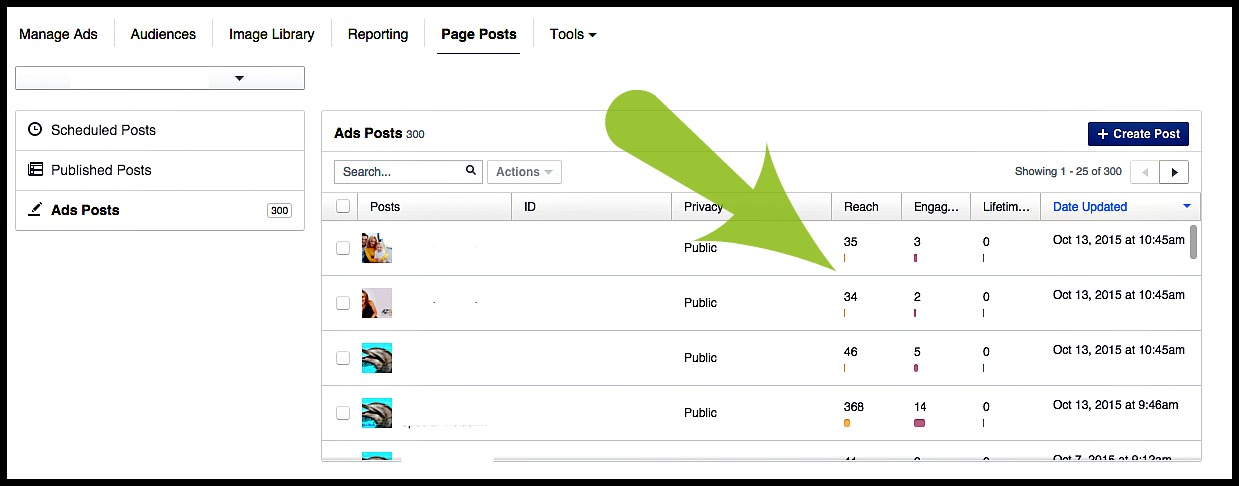
This is one of my favorite features. The Power Editor shows you all kinds of analytics about the different posts on your business’ Facebook page that you really can’t get elsewhere. You’ll see the reach of your posts, engaged users, and how many people are talking about your company. Compare each ad side-by-side and see which ones deliver the best results.

Power-Editor-Page-Posts

The important thing is to learn from this data. Analytics are great, but if you aren’t changing or learning from them then you might as well not even use it. Let the analytics guide you towards better future ad performance.

4. Take Full Advantage of All Its Features

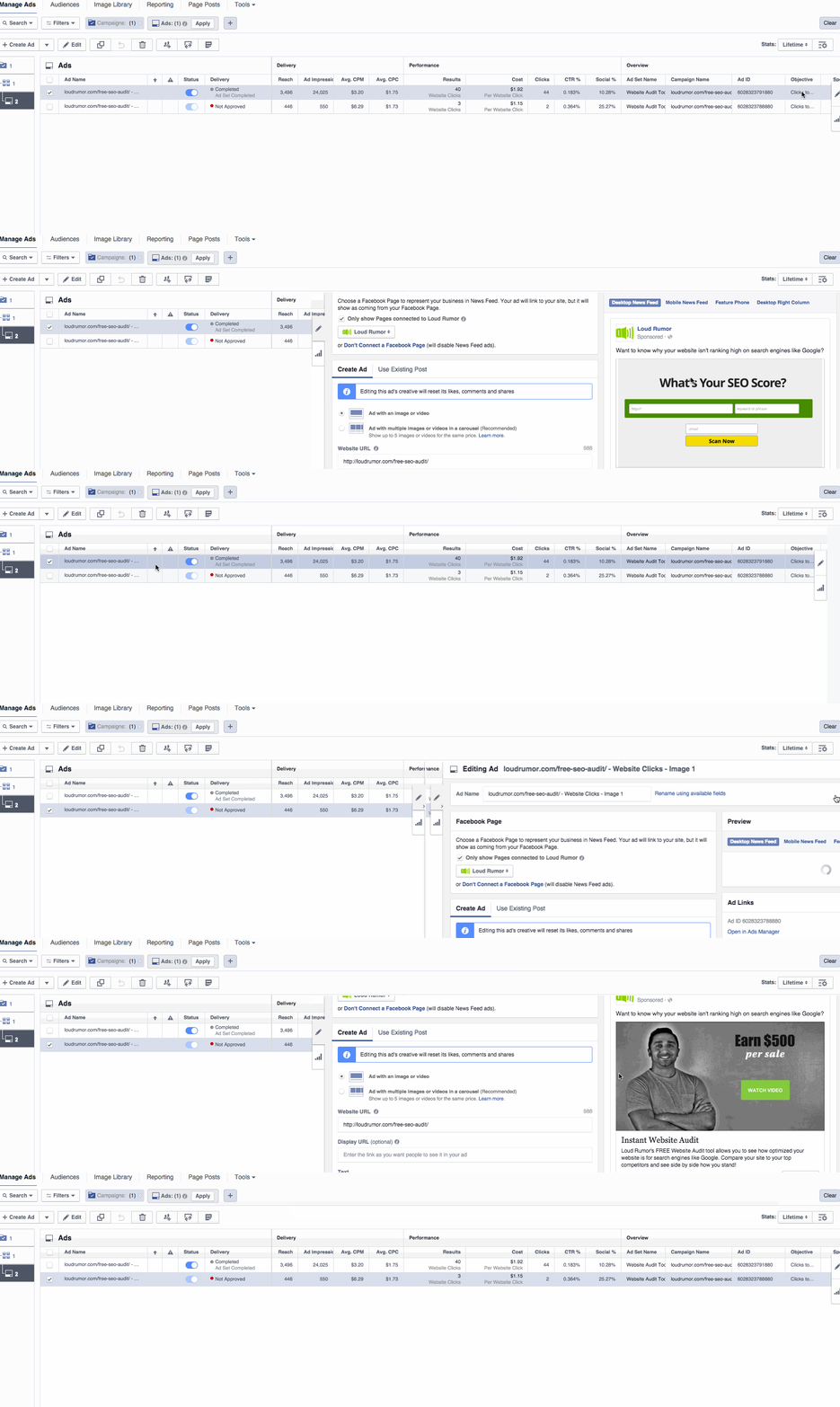
The main reason the Power Editor can seem so foreign is because it’s unfamiliar. It’s different from Ads Manager – but that’s a good thing. The Power Editor allows you do a lot more.

For example, Power Editor has made it incredibly easy to duplicate your ads. And that’s really handy when you want to continue the same campaign without creating an entirely new ad.

The Power Editor also makes it very simple to shift through your different ads with ease. Let’s say you have a campaign with several different ads. In order to check on those ads, you no longer have to open an entirely separate window like you do in Ads Manager. This allows you to optimize, review, and research all under one umbrella so you can really get into the nitty gritty of your marketing efforts.

facebook-ads-dashboard

5. Make Sure You Know How to Get Niche with Your Targeting

You put a lot of effort and time you put into your ad research and creation. Now you want to make sure your ad is seen by the right people.

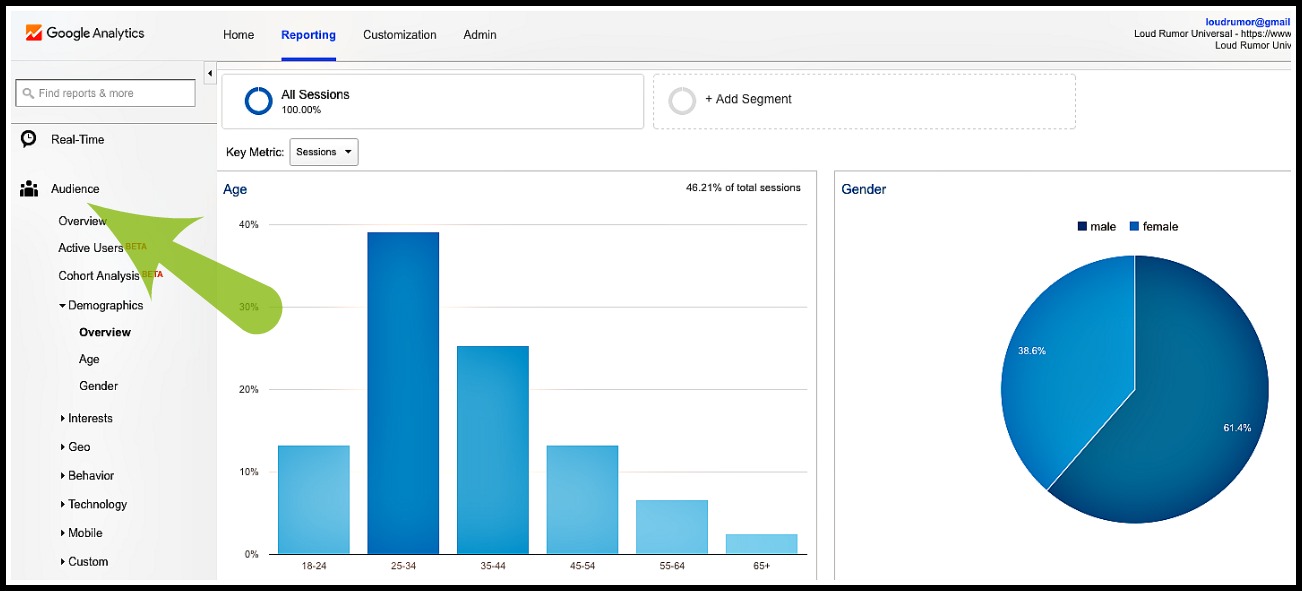
That means you need to understand your audience settings and targeting metrics. First you’ll research your target audience, which can be seen through Google Analytics’ Audience data.

Google-Analytics-demographics-overview-navigation

You’ll also want to look at your current clients and see what traits overlap there. These are the factors you’ll want to target with your audience setting (gender, sex, interests, behaviors, and so on).

6. Utilize the Reporting Features

This feature is really cool. It allows you to capture all of your campaign information and export it into a beautiful report. This is especially great for marketers who want to send Facebook ad results to clients.

facebook-power-editor-Reporting

The reporting features show insights such as cost per conversion, total spend on a campaign, the reach of your campaign, frequency, impressions, unique clicks, and more. You can customize which of these insights you’d like to capture. This is useful because it allows you to monitor certain aspects of your ad performance so you can determine what you want to optimize.

Also, make sure you are looking at the metrics that are important to your objective. If you’re running a campaign to increase page likes, you might not be as concerned about CTR or conversions. But it you’re running an ad to sell a product or service, you might not care as much about page likes or impressions as much as you would clicks. So when you’re viewing the spreadsheet, monitor the insights that are most important to that specific campaign.

Conclusion

Marketers tend to have a love-hate relationship with Facebook. But that’s because we all know just how important it is for business. To become great at paid acquisition, you’ll need to be able to conquer the Facebook world. And a huge part of that includes the Power Editor!

If you have any questions on how to get started with your next campaign, drop a comment below – let’s brainstorm together.

About the Author: Mike Arce is the founder and CEO of Loud Rumor, an online advertising company for small businesses. Mike has a passion for local businesses and helping them grow. He has spoken for companies like Infusionsoft, the Better Business Bureau, ASBA, Local First and more! Follow Mike on Twitter.