Tuesday, July 28, 2015

5 Ways to Become a Better Headline Writer

Article headlines make the Internet go round.

Ask any marketer, any writer, any reader, anyone. They’ll tell you: Article headlines are super important.

How important, really, are headlines? Experience, data, and history all point to the fact that headlines are the single most important component of an article, bar none. You’ve heard the statistics repeated ad nauseum — 80% read the headline, 20% read the article, ten seconds to gain someone’s attention, and all the other scary and data-driven statistics.
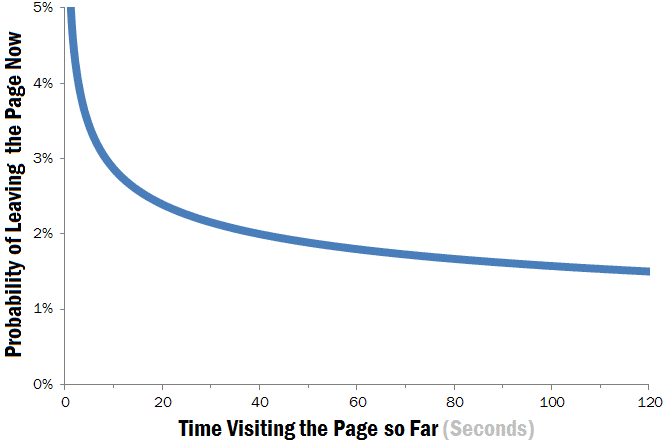
how-quickly-people-leave-webpages

Source

Recognize this? I thought so.

You know all this. More relevant to you is your own experience with headlines. Why are you even reading this paragraph right now, at this point in the space/time continuum of your mortal existence?

You were beckoned by the headline, formula-driven and hackneyed as it was, right?

Even though we’re Buzzfed up, Upworthyized, Viralnovaed, and Clickholed out of our minds, we can’t shake off this all-important reality: Headlines are freaking important.

In fact, the word “important” isn’t strong enough.

I’ve summed up the X ways that are guaranteed to turn you into a better headline writer. No matter who you are, what language you speak, or your final grade in composition class, you can develop white-hot skills in headline creation. Starting now.

Once you reach this level of awesome, you’ll reap the rewards in traffic, audience, readership, engagement, conversions, and, hey, even feeling really good about yourself.

1. Know Your Audience

I hate to lead off with a boring one, but it’s critical. You have to know your audience.

Let me give you an example to explain what I mean.

Look at this headline: “Neuropeptide Y—a novel brain peptide with structural similarities to peptide YY and pancreatic polypeptide.”

nature-neuropeptide-headline

Is that not magnetic? Did it not capture your attention in two seconds? Will you not read the entirety of the article with rapt attention and owl-like eyes?

You might find this headline uncontrollably entrancing if you are a peptide researcher, are a neurobiologist, are K. Tatemoto, or have a side hustle researching pancreatic peptides.

This headline might just be the most electrifying headline in the whole world. Why? Because it could be exactly what some people are interested in. A good headline is relevant to the audience.

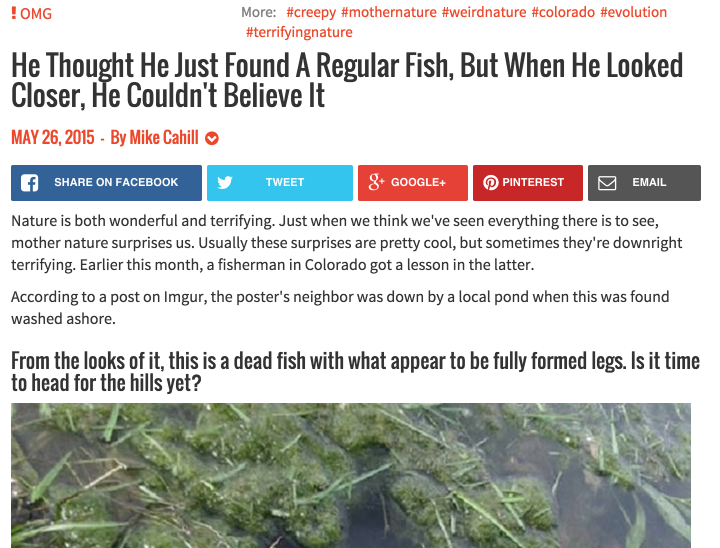
Get it? Okay, now, here’s another example: “He Thought He Just Found A Regular Fish, But When He Looked Closer, He Couldn’t Believe It.”
regular-fish-shock-and-awe-headline

Is that appealing? Absolutely. It has a wider appeal than polypeptides, which is cool, because ViralNova isn’t concerned about targeting a narrow slice of the human population. They are concerned with getting as many eyeballs on their content as possible. Who wouldn’t want to find out about a guy who couldn’t believe it when he thought he just found a regular fish?

What is the difference between the peptide headline and the mind-blowing fish headline?

Audience.

It all comes down to audience. The Nature Science Journal has identified the audience that they want to attract (scientists), and ViralNova has identified the audience that they want to attract (warm bodies with a proclivity for clicking).

The right headline is only the right headline for the right audience. (Yes, I used the word “right” three times in that sentence, and I’m not apologizing.)

So, what’s the takeaway for you who desire to be a better headline writer?

Know your audience.

Once you figure it out who your audience is, really and deeply, and discover what they want, you can create the best headline for them. A good headline is only as good as it is relevant to your audience.

2. Practice

You only get better at something by doing it. A lot.

Improvement gurus call it deliberate practice or DP. Why is Kobe Bryant so good at basketball? How did Misty Copeland become a star ballerina?

Talent is overrated. Practice is everything. It’s no different with writing headlines. You’ve got to do it again, and again, and again, and again to the power of 100.

Sims Wyeth, an Inc. contributor explains, “to get better at almost anything” you have to practice. That practice, deliberate practice to be precise, “consists of endless repetition and excruciating boredom.”

Did you get that? Endless repetition. Excruciating boredom. Getting better at headline writing is an attractive destination, but the path to get there is agonizing. You’re not going to love it. You’re going to loathe it.

Coschedule recommends writing at least 25 headlines per topic/article in order to come up with the best one. After you come up with 25, you eliminate over half, narrow it down to the best five, and poll your friends on the best of the survivors.

25 headlines is a lot of headlines. But it’s not just the number that is important. It’s the practice that goes into writing headline after headline after headline.

Practicing writing headlines produces perfect headlines.

3. Follow Patterns

I’m skeptical of formula-driven headlines. How many “things you didn’t know,” and “7 ways” (oops), and “you’re doing it wrong” articles can a single human being take in during a single lifetime?

But here’s the thing. Headline formulas and patterns become formulas and patterns because of their proven past success. Even though you’ve already read eighteen “how-to” articles and nine list posts today, you’ll probably give in and read another six or so before 5pm.

For example, Brian Clark of Copyblogger wrote an article a while back called “10 Sure-Fire Headline Formulas That Work.” His headline? It worked.

And his formulas? Heck, they work, too!

One of the reasons why they work is because they are psychologically appealing (more on that later) and audience specific.

Let me show you one of Clark’s formulas as an example.

Formula: Here is a Method That is Helping [blank] to [blank]

The title here is ready to be tailored to a specific audience. Here are Clark’s three examples with my description of the intended audience.

Here is a Method That is Helping Homeowners Save Hundreds on Insurance
Audience: Homeowners who want to save money

Here is a Method That is Helping Children Learn to Read Sooner
Audience: Parents and child educators

Here is a Method That is Helping Bloggers Write Better Post Titles
Audience: You

The formula-driven technique is only as effective as the titles are relevant to the audience. Go back to point number one and read it again if you’re not entirely clear on this concept.

If all else fails and you simply cannot come up with a good headline, use a formula. They’re like training wheels. The more you write, the better you’ll get. And then you can branch out on your own.

4. Split Test

Split testing is the key to unlocking the potential of your website. I test everything. Images, kerning, headlines, post length, social media frequency, load time, navigation changes — everything.

Why? Because split testing produces improvements.

If you aren’t split testing your headlines, you’re missing out on a major source of knowledge. The better you know how your headlines perform, the greater ability you possess to produce killer headlines.

Let’s say you produce a headline for an article, publish the article, and it gets shared and liked. Good. But what if you had written a different headline? Would it have gotten more shares and more likes? You won’t know unless you test.

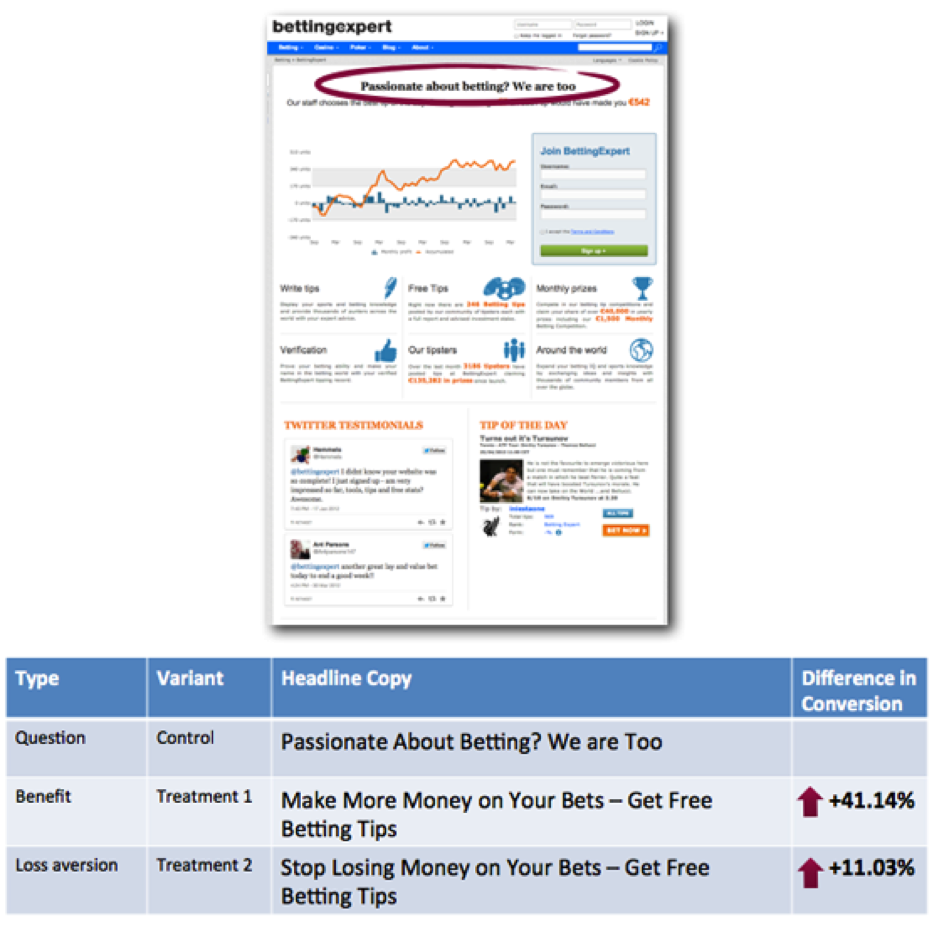
In a study released by Unbounce, one website tested three headlines, leading them to discover the winning headline with a 41% boost in conversions.
headline-ab-test-winners-losers

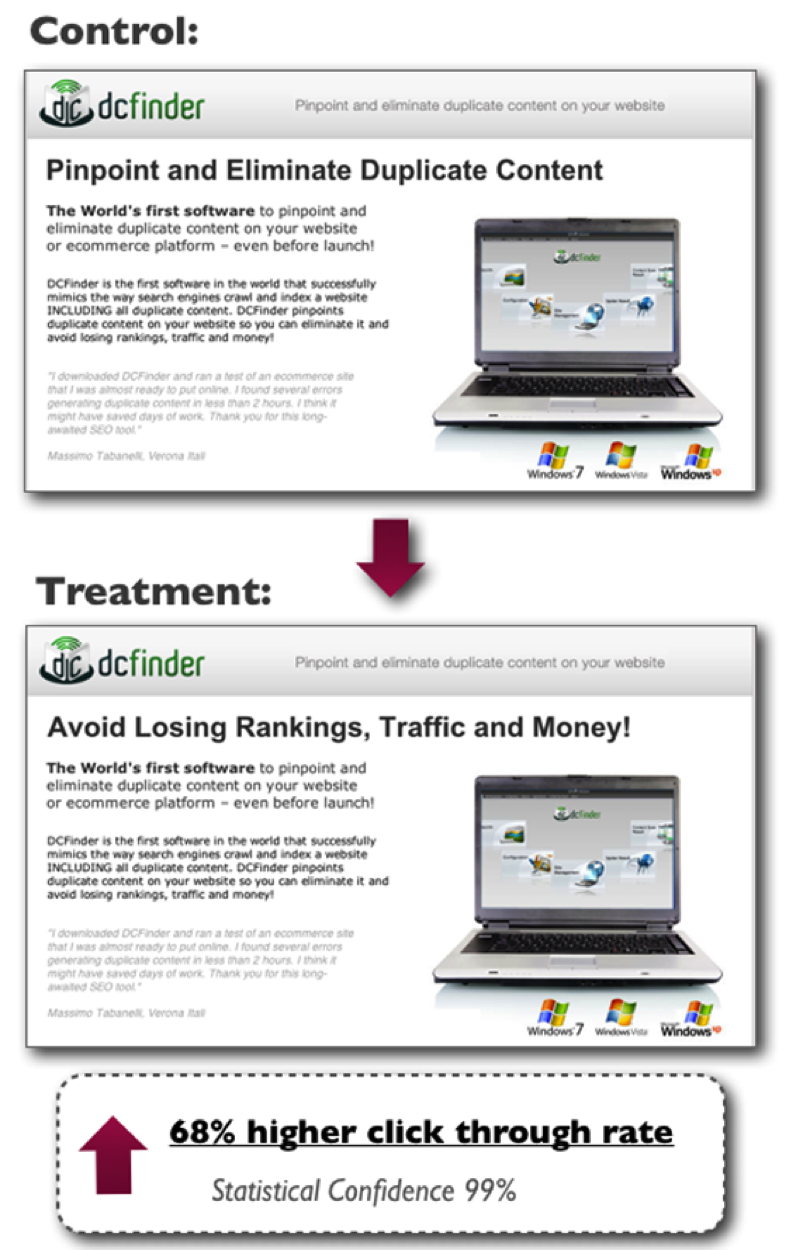
Another single headline change produced a 68% higher CTR.
headline-test-68-percent-higher-ctr

Sources for both images

Testing is a scientifically sound and rigorous method of determining the actual best headlines. By running these tests and uncovering the comparative success of your headlines, you can’t help but get better.

A less scientific way to test your headlines is with simple polls. When you come up with a series of headlines, send them to your colleagues and let them vote on which one they think is best. Although it’s not quite as sophisticated as running a split test, you’ll still be able to learn what best resonates with people.

By polling and testing, you overcome one of the greatest roadblocks to writing effective headlines: Your own flawed assumptions. Assumptions are like a rut. You get stuck in it, don’t know you’re in it, and your conversions and clickthroughs are dying as a result.

Kick yourself out of the rut with a little good old-fashioned testing, and you’ll race lightyears ahead in your headline creation skill.

5. Study Human Psychology

This final point sounds a bit weird, but it’s incredibly effective.

Human psychology is the study of the mind — how it works, how it is motivated, how it processes information, etc. By unlocking a few common thinking methods, cognitive biases, and tendencies, you will be able to learn powerful ways of writing headlines that people deeply crave on an elemental level.

For example, are you aware of the self-reference effect? According to the self-reference effect, the human mind interprets events and experiences in a different way if the information is related somehow to themselves. Memory works better when the information being remembered is related to the self.

When this mental effect is applied to headline creation, it lets us know that we need to relate the headlines to the audience. More specifically, the self-reference effect informs us that using the word “you” or equivalents in a headline may improve the memorability and attractiveness of a particular headline.

There’s no reason why issues like the self-reference effect should be locked away in volumes of peer-reviewed cognitive neuroscience medical journals. You should be using such knowledge to enhance your own article titles.

Conclusion

Becoming a better headline writer is the good life. When you can unleash great headlines with skill and ease, everything in online marketing gets better. Conversions. Engagement. Clickthroughs. Shares. Traffic.

It’s all there.

“Getting better,” however, isn’t an accident. It requires intentional and sometimes mind-numbing effort. Remember the whole “endless repetition and excruciating boredom” bit? Yeah, it’s going to feel like that sometimes.

Don’t stop. Success is in the offing. Let’s go make headlines that turn heads.

How have you improved your ability to write great headlines?

About the Author: is a lifelong evangelist of Kissmetrics and blogs at Quick Sprout.

Saturday, July 25, 2015

Is Your Winning Variation Actually Leading to More Cancellations? How to Use Data to Find Out

Imagine this: you just found a huge win on an A/B test. Your variation doubled signups over the original. So you launch your variant to 100% of visitors. Pop the cork! Here come the signups.

Fast forward six months, and you have a surge in cancellations. Your customer support team can’t figure it out, and there have been no major changes in your product. You are left puzzled and frustrated.

Then you realize something. For the past six months, people have been signing up through the variant. Could this be the cause of the cancellations? If you use Kissmetrics, you can get the answer.

Identifying Whether a Variant Led to More Cancellations

Using Kissmetrics, you can find out if an A/B test that initially delivered more signups ultimately led to more cancellations. It doesn’t matter if the test was six months ago. You can still go back retroactively and see how the test performed and whether the variation brought more cancellations. Here’s how we do it.

The Funnel Report

A funnel report is used to track how many people move from one step of your website to the next. Marketers traditionally use a funnel report to see where visitors are dropping off in their path to purchase.

But we can use the Kissmetrics Funnel Report for other purposes, too. One of them is to see which test variation led to more cancellations. To do this, we’ll create a funnel for just two steps – signed up and cancellation. When you use Kissmetrics, you may name your events a little differently, but if you’re a SaaS company, you’ll need to know when people sign up and when they cancel.

Here’s how our funnel looks:

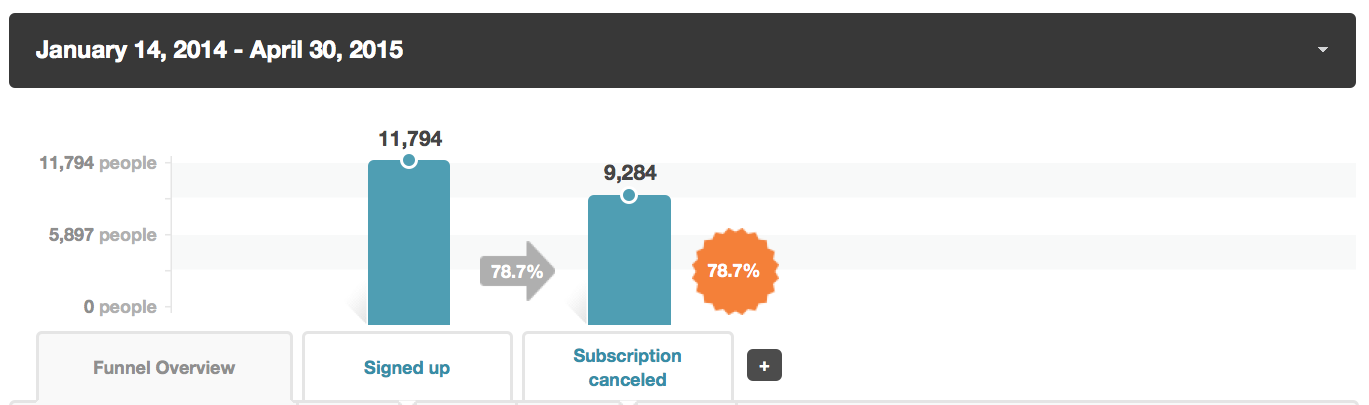
kissmetrics-funnel-report-cancellations

During our selected time range, we had 11,794 signups. Of those 11,794, nearly 9,300 canceled. To see how each variant performed, we’ll have to segment our traffic. “Segment” is a fancy, analytical way of saying “group.” So if you came to our site and saw the variant, you’d be put in the variant group/segment.

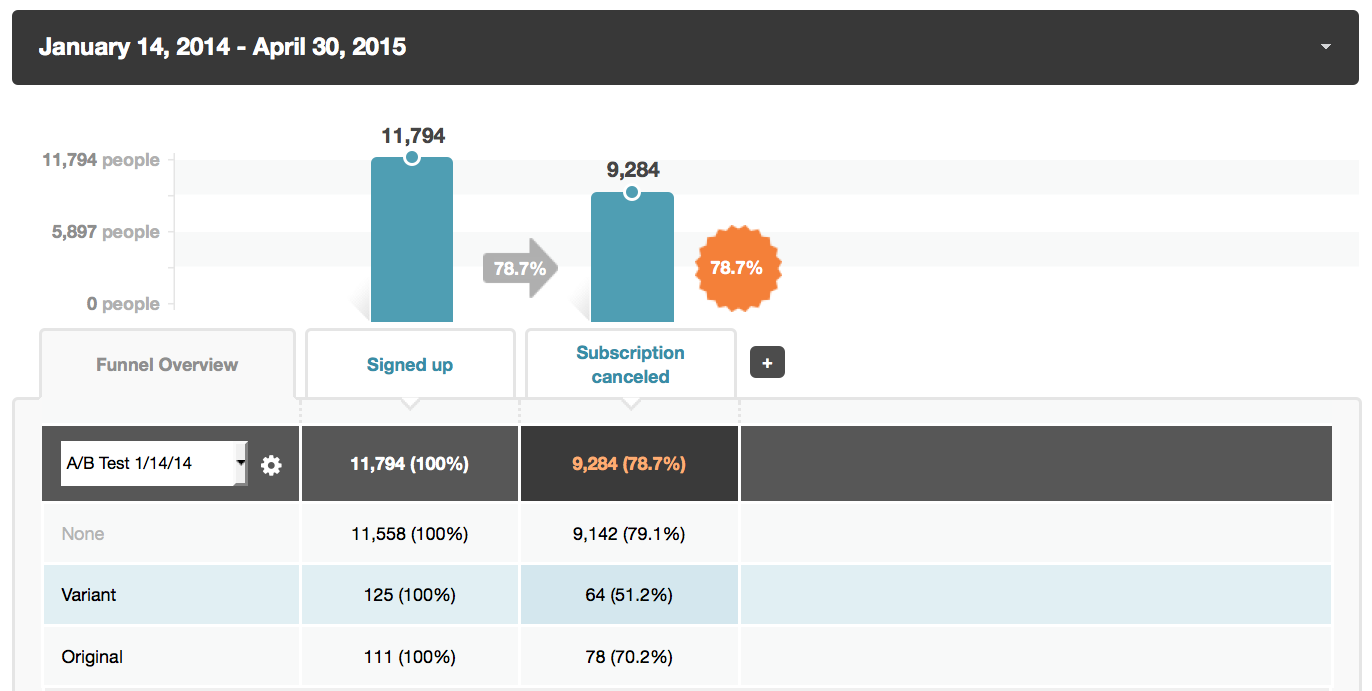
Here’s the funnel, segmented by the A/B test:

ab-test-segmented-cancellations-kissmetrics

We can ignore “None.” These are people who were not in the A/B Test. They didn’t see the variant or the original.

Underneath “None” are our A/B test pages. We have our variant and the original. The variant page generated 125 signups, while the original delivered 111 signups. Also, the variant delivered a much smaller percentage of cancellations.

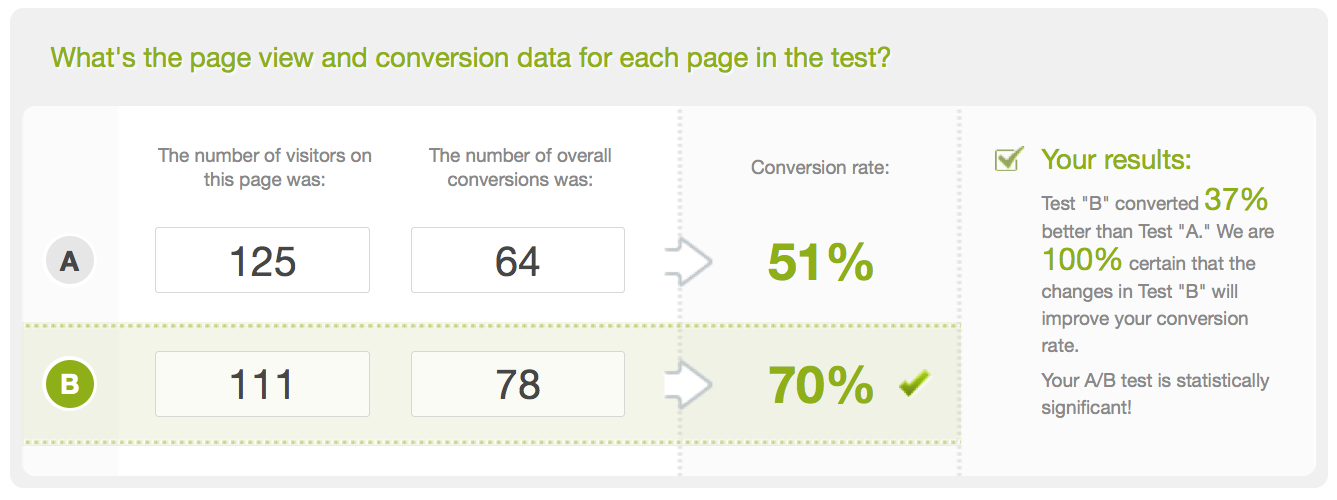
Before we can say the variant is a winner, we’ll need to make sure this data is statistically significant. We can use the A/B test significance calculator to get this data. Here’s how it looks:

ab-test-significance-calculator

On the right, we see that this data is statistically significant. We can move forward with full confidence knowing that the variant page is the real winner. Customers who saw this page will be less likely to cancel later on down the road.

A Word of Caution

While this data is valuable, it’s important to be careful with the conclusions you reach.

While the original/variant page did lead to more cancellations and it is statistically significant, can we be 100% no-doubt-about-it absolutely sure that this is the reason more people canceled? No, we cannot. Correlation is not causation. It could just be happenstance that those shown the original/variant page canceled at a higher rate than those shown the variant/original – and the original/variant page should not be blamed.

This also doesn’t mean the data is worthless. Perhaps the original/variant page made a promise that the product couldn’t live up to. Or maybe the original/variant page attracted the wrong audience. To find this out, we can collect data from our canceled customers and see if we find trends. If not, it may just be coincidence.

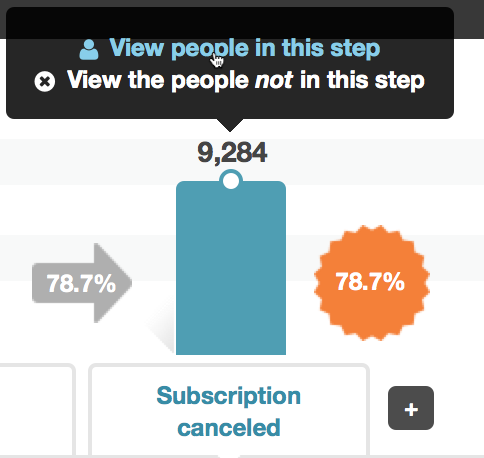
We can find the canceled customers in Kissmetrics. Here’s how:

view-people-in-step-kissmetrics-funnel-report

We’ll click to view the people in the “Subscription canceled” step and view the people in the variant segment. From there, we’ll get our list of people, and we can contact them to learn why they canceled.

Track Tests with the A/B Test Report

Kissmetrics has a report that tracks your A/B tests. It’s called the A/B Test Report, and it has some unique features.

This report does not create tests for you. You can still use Optimizely, VWO, Unbounce, etc. for that. It does track the test, report the results, and import the data into your Kissmetrics account. There are a few additional benefits of using this report:

  • The statistical significance calculator is built in. You’ll see the amount of data that came in, and the Report will draw a conclusion for you (e.g., variant beat original). Its calculator will ensure the results are statistically significant, which can reduce the odds of false positives.
  • You can see how an A/B Test impacts any part of your funnel. Want to see how a homepage headline test impacts signups? No problem, just set “signups” as your conversion event. You aren’t limited to testing only to the next conversion step.

Here’s how the report looks:

view-people-in-step-kissmetrics-funnel-report

You’ll get multiple metrics for each variant, and even be able to see every person in each variant.

Click here to watch a video demo of the A/B Test Report.

Get the Whole Picture with Kissmetrics

It would be impossible to get this kind of data if you weren’t using a tool like Kissmetrics.

A benefit to using a people-tracking platform like Kissmetrics is that each visitor to your site is recorded as what they are – a person, not a session. This makes your data accurate.

If you’re running an A/B test, each person gets tagged with the pages they saw, and you’ll be able to go back and see which pages/steps they went through, as we just did. With Kissmetrics, you can see the entire customer journey, from when the prospect first visited (and which variant they saw) to the customer’s most recent action. As long as you have the tracking in place, you can get the important data you need.

To see how Kissmetrics can benefit your marketing, signup for a personal demo today. To get right into it, you can signup for a 14-day Kissmetrics trial.

About the Author: Zach Bulygo (Twitter) is a Content Writer for Kissmetrics.

Thursday, July 23, 2015

Stories are Told, Not Programmed: 3 Keys to Marketing Your SaaS Product to Human Beings

SaaS companies are quite literally changing the face of business. Seemingly every day new tech-driven solutions are challenging the status quo of the ways business communicate and share information.

While new developments in technology are obviously crucial to progress in any industry, what some SaaS companies fail to do is remember the single most crucial shared characteristic of their audience: they’re human.

Not capitalizing on the imagination of your audience is like trying to fix your printer by having a conversation with it. It simply isn’t what works. If we don’t try to talk to computers with human language, why do we try and do the opposite?

No matter what the industry, the way to create messages that resonate with people is through stories. Here’s three simple ways you can take your SaaS marketing strategies and bring your story to life:

1. Simplify

Keeping things simple may sound simple, but too often SaaS companies get in their own way and try to throw too much at their audience when marketing their product. If nothing else, simplicity is everything. As humans, we crave it. And perhaps the only thing smaller than our tolerance for complexity is our fleeting attention spans. The most effective language around SaaS products are the ones that waste no time in explaining exactly how it benefits a user.

Take 1Password for example: it’s a computer software that protects a variety of important log-ins and passwords from hackers or thieves. While 1Password is composed of an intricate security vault system, they simply speak to what the consumer truly cares about: safety.

1Password is advertised as simple, convenient security, which loosely translated, means peace of mind.

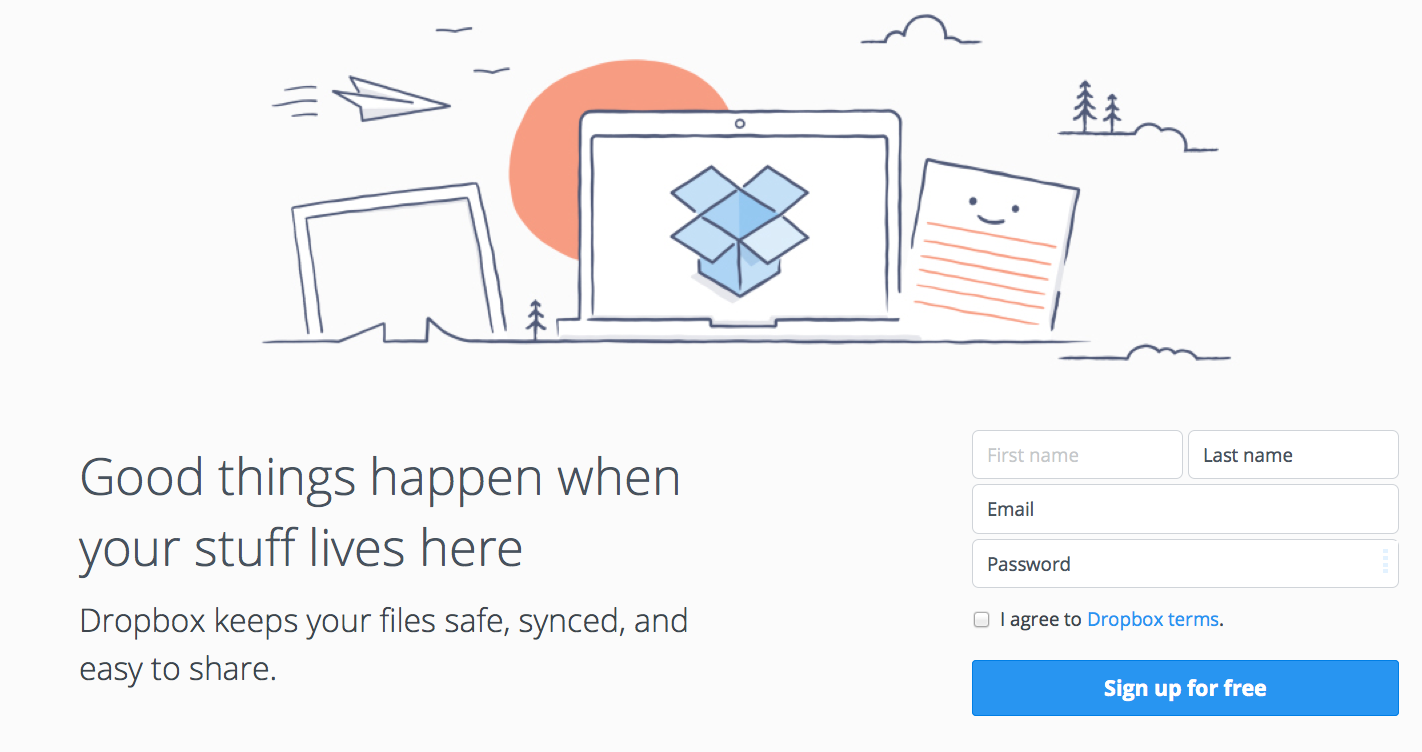
Dropbox’s branding similarly embodies this tactic – their leading message on their homepage reads: Good things happen when your stuff lives here. Much like 1Password, they focus on a simplified benefit of the product.

dropbox-homepage-good-stuff-happens

It’s conversational. The incredible complexity and technology behind Dropbox has been boiled down to the most basic and straightforward conclusions that could possibly be drawn, thus appealing on an emotional level to the humans who use it.

2. Metaphors + Parallels

This would be a technique perhaps best used during investor presentation or initial product demo to simply explain what it is your product or service is all about. Even when speaking to a tech-savvy audience (which isn’t always the case), we encourage our clients to draw parallels and metaphors to help explain their product’s problem, solution, technology etc. By bringing complex information back into ideas and concepts that anyone can understand, you can eliminate gaping question marks very quickly.

For example, say you’re pitching your SaaS platform that helps unify and monetize data sets and algorithms in the climate research space. Rather than diving head first into the back end framework and development strategy, consider stepping back and explaining the fundamental problem using a concept anyone can understand.

Lead with a story about farmland. It may sound farfetched, but it works. Say things like:

Imagine you wake up tomorrow and decide to become a farmer. You buy 200 acres of land to grow a combination of corn, beans. wheat, etc. You plant thousands and thousands of seeds in fertile ground and wait for mother nature to play it’s part. Only it never does. Your seeds have been planted by they lay dormant without a little help from mother nature.

Now imagine the farmer on the plot of next to you has the exact opposite problem. His land has been flooded with rain and the sun is shining, only there’s just one problem. He has no seeds. Both farms have incredible potential to grow useful crops, yet they both don’t have access to the things they need on their own.

Well that’s exactly the problem that exists in the world of climate science analytics today. Vital data and the analytical models they depend on have been and it’s why we created ForeCastle (fictional – not a bad name though, right??)

Paint a picture in your audience’s mind and not only will you win their attention immediately, but you’ll dispel any confusion about exactly what it is your product is all about.

3. Tell People What You Believe

Everything we do as people – from the toothpaste we buy to the car we drive – everything is governed by what we believe. Beliefs polarize, galvanize and inspire us into action. The best marketers are the ones who take advantage of this reality and build bold communication strategies that tell the world what they stand for.

Take one of the hottest communication platform SaaS companies in Slack for example: Their tag simply reads “Be less busy”. With three simple words, Slack is telling you that they understand the crazy workload you have to endure and that they believe something can be done about it. They tell you that they believe a fundamental flaw exists in the way businesses are run. While claiming that businesses should address their communication issues is certainly nothing new, claiming that they have a platform that could “end email” separates Slack from both competitors and potential customers who believe that email has become a sacred cow of the business world.

For Saas companies that similarly serve as networks, such as LinkedIn, this step is exceptionally important because those beliefs are what attract users. As a business oriented social networking site, LinkedIn believes that individuals should be in control of their professional identity and should have the opportunity to engage with likeminded, professional individuals. Therefore, those users who believe that a professional networking site is beneficial will use it, thus perpetuating the belief and creating a community of humans who feel the same way.

By using this belief as the foundation for the way they talk about their services, they’ve allowed us to connect with them in a way that’s as aspirational as it is human.

It’s easy to get caught up in the tech-first approach to marketing SaaS companies when that technology lives so close to the core of what your company is. But humans don’t respond to bone dry data like we do to stories and ideas. It may seem counterintuitive but the reality is – storytelling is one of the simplest and scientifically proven methods for connecting with people. With just a few strategies – you can capitalize on the most fundamental characteristic of your audience no matter who they are – they’re good old fashioned blood pumping human beings

About the Author: Maxx Parcell is the lead Content Writer and Developer at SquarePlanet in Chicago, IL. His job is to help our clients tell their story more effectively. Including anything from sales pitches to full brand message strategy, we work to help people improve the way they communicate and connect with people. We do things a bit differently. We believe in being pirates. For more information about exactly what that means and to read our own blog, please visit SquarePlanet.com.

How to Optimize Your Site for Every Stage of the Buying Cycle

If you’ve been in marketing for a while, you’ll eventually discover a harsh reality.

You can’t force people to buy from you.

No matter how sexy your site or how awesome your conversion methods, you can’t automatically turn an unwilling customer into an eager spender.

Why not? It’s explained by something called the customer buying cycle. To understand the buying cycle to its fullest, you must also understand your customers. You can find out why they didn’t buy, what might make them buy, and why they might come back to buy in the future.

My goal in this article is to show you how you can optimize your site for every stage of the customer buying cycle. Even though you can’t make a customer buy, you can at least know how your site can meet the specific need that the customer has at any given point in the buying cycle.

What is the Buying Cycle?

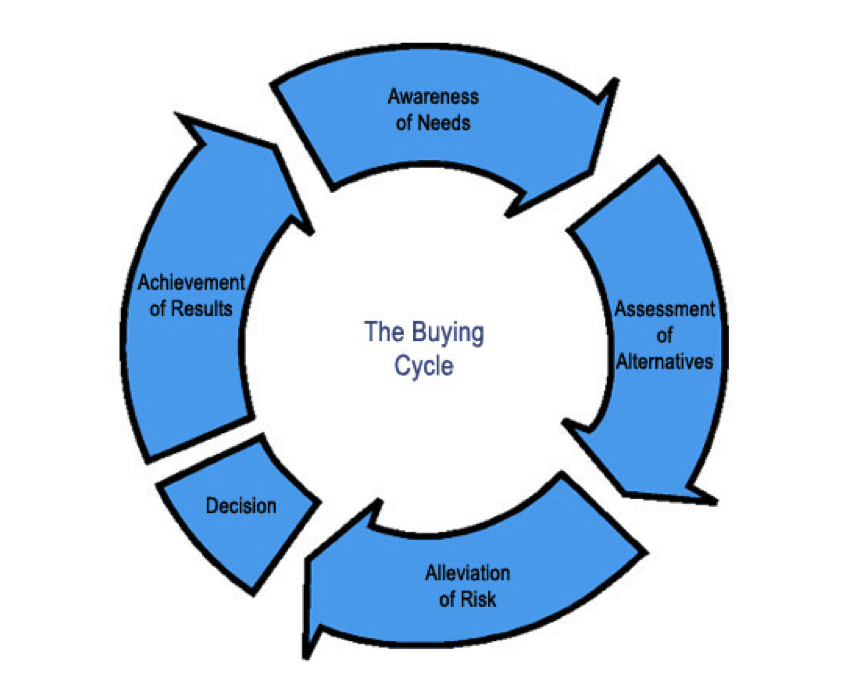
The buying cycle is the process that every customer goes through when they purchase an item.

It looks like this:

the-buying-cycle

It’s described as a cycle, because it tends to be repetitive. You can also look at it as a linear process.

There are hundreds of versions of the cycle. The specific cycle depends in large part on the specific product that you are selling.

The broad truths to keep in mind regarding the buying cycle are as follows:

  • Every customer goes through some process of consideration, realization, and conversion.
  • The customer can only be in one spot of the cycle at a time, for any one need.
  • The success level that you achieve when marketing to that customer depends on where he or she is in the buying cycle.

And that’s where we come back to the harsh truth: About only 3% of the people who visit your site are going to buy your product. In fact, you’re generally doing well if you can get more than 3%.

What’s happening with the other 97%?

They’re leaving, choosing not to buy, going away.

Anyone who didn’t convert is at some other phase in the buying cycle. They might not ever convert. They might convert someday.

You need a marketing strategy that is actively targeting the vast percentage of your website visitors. I’m not talking about individual conversion methods here. I’m talking about broad content tactics that move any visitor closer to a conversion — to the next best phase in the buying cycle.

Your goal is, of course, more conversions. But to think of it more broadly, your goal is simply to move the customer to the next phase in the buying cycle.

Let’s talk about how to do that.

Phase 1: Conception: The Customer Realizes a Need

Customer Question: What is my need?

In this phase, the customer is trying to figure out what exactly they need. They have no focused questions yet, only a vague awareness that they have a need.

Your Marketing Move: Describe the problem

Before opening up your marketing methods, make sure you understand all you can about your customers’ needs. Some businesses may perform a “customer needs analysis” to try to hone in on the problem.

Your content marketing is one of the best places to focus your strategy. At this phase in the buying cycle, customers want information (i.e., “informational query”).

To gain traffic from these informational queries, construct a content marketing approach that focuses on problems and solutions. Some of the best blogs in the business are all about problems and solutions that the target audience needs.

Buffer, for example, publishes outstanding long form content focused on the types of solutions that their prospective customers need.

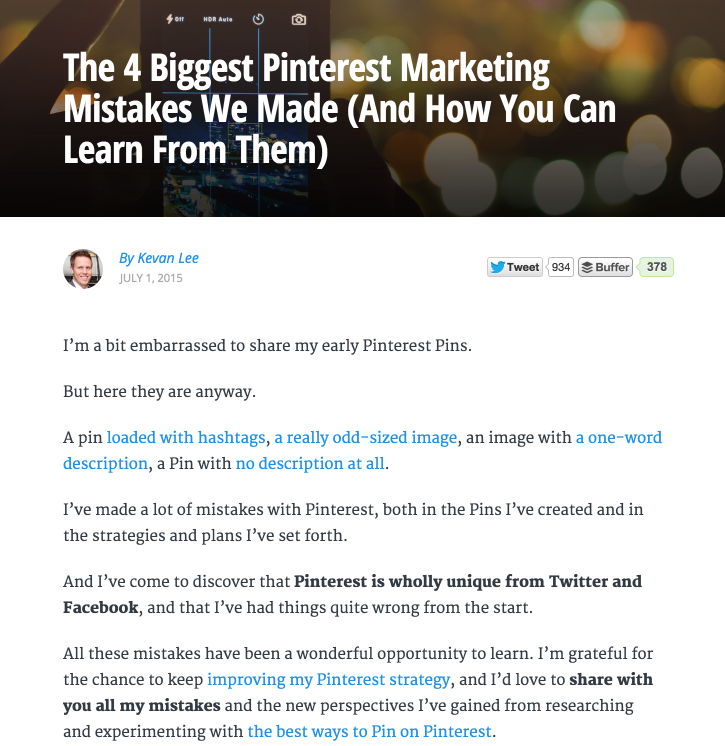
For example, Buffer recently published an article on Pinterest marketing mistakes. They know that their target audience is trying to figure out how to optimize their Pinterest social strategy. Since Buffer’s product is all about social sharing, they’ve got the kind of content that is going to attract the problem-centric queries that their audience is using.

buffer-pinterest-marketing-mistakes

The article starts with a problem, focuses on a solution, and leaves the customer with actionable steps to improve their Pinterest strategy.

Plus, as always, they include a CTA at the end of their blog post:

buffer-ending-cta

Most content marketers are challenged by trying to figure out what kind of content will engage their prospects.

buffer-ending-cta

If you filter your content marketing approach through the matrix of “needs and problems,” then you’ll have plenty of fodder for content.

Prospective customers will find you, engage with your content, and move on to phase 2.

Phase 2: Comparison: The Customer Explores Options for Meeting this Need

Customer Question: What is the best way to meet this need?

At this point, you’re not the only player in the game. The customer is scoping out alternative prospects. Other businesses know about content marketing, and how best to attract the solution-seeking customer.

The queries are still informational and solution-focused. Now that they know their problem, they are moving towards a solution.

Your Marketing Move: Options for Meeting the Need

Content is still going to play the lead role in your marketing approach for this phase of the buying cycle.

The same content that attract the prospects’ information queries in the first phase is going to be the same content that drives them to the consideration phase. Not only should your articles be problem-centric, but they should be solution-focused.

Make sure you’re trying to solve the issue beneath the issue. For example, your customer may be buying a bed, but what they want is a good night’s sleep.

buffer-ending-cta

Market to the core need of the customer, not just the specific widget they’re in the market for.

Phase 3: Consideration: The customer narrows down options, and makes a judgment about the best one

Customer Question: Which solution is the best for me?

Each of the three phases of the customer buying cycle so far have been fluid. A customer may move rapidly through each one, and your marketing move is pretty much the same — create solution-focused content.

Here is where the consideration process gets deeper. You’re dealing now with an informed customer. She knows the marketing, understands price points, is aware of the brands who can solve the problem, and realizes what she needs to do next.

You can finally forget about solutions. The customer is way beyond that phase.

Now, your customer wants to hear about features.

Your Marketing Move: Explain the features and benefits of your product

This is, by far, the biggest phase in the buying cycle. At this point, the customer is actively engaged on your site, interacting with your content, downloading your PDFs, and viewing your pricing. At this point, you can pull out all the optimization stops, unleash all the methods, and do everything in your power to get the customer to convert.

The questions that the customer is asking at this point have deepened and become more specific. She has answered the big what question, now she needs to answer other questions:

  • How does this feature integrate with…?
  • What are the terms on the guarantee?
  • How easy is it for me to get in touch with support?
  • Can I return the item?
  • Is the team friendly, professional, competent?
  • What are the shipping costs?
  • What are the delivery times?
  • How much storage space do I get?
  • What if I don’t like it?
  • Is there a warranty?

Your website’s evergreen and product pages are now the focus content. You’ve managed to earn organic traffic from the customer’s queries. Now, you need to earn their respect through comprehensive, detailed, powerful, and compelling descriptions, content, and information that is specific to your product.

I’m not merely referring to the way in which you create compelling and SEO-friendly ecommerce pages. I’m referring broadly to the way that you shape content on your site to explain everything possible about your content.

  • Create content about each feature.
  • Create content about your support.
  • Create content about your warranty.
  • Create content about your technical specifications.
  • Create content about all the details of the product.

The more content, the better. The customer is actively seeking more information, more distinguishing features, more characteristics, and more aspects of the product.

If you have more information than the competition, then you possess a remarkable advantage. You will be able to nudge the customer out of phase 3, and into phase 4 — conversion.

Phase 4: Conversion: The customer buys the chosen option

Customer Question: How do I buy this product?

The customer is ready. Your problem-centric, solution-focused, feature-driven content has pushed them to this culminating point.

They are ready to buy.

Your Marketing Move: Engage in conversion optimization

This is the spear tip of conversion optimization — getting customers to convert on a purchase. Before, you may have optimized your blog’s CTAs, adjusted headlines, and performed the kind of tweaking necessary to boost conversion rates.

Now, you move it up to the final phase — optimizing buy CTAs, optimizing the pricing page, and streamlining the shopping cart. You don’t want anything to get in the way of a killer close

This is that point in the article in which I talk about the staggering cost of shopping cart abandonment. Just because a customer drops your widget into his cart doesn’t mean he’s going to buy it. In fact, nearly 7 out of every 10 customers who puts a product in their shopping cart are going to abandon said shopping cart. You’re going to feel frustrated.

As with any problem, there are solutions. Focus on regaining abandoned customers, but remember that they may still be flitting in and out of various stages in the buying cycle, so don’t completely lose your mind if you have high abandonment rates.

Phase 5: Continuation: The customer returns to this option when the need arises again

Customer Question: Should I buy this product again?

Marketing isn’t over when the customer buys. In fact, a new and heightened phase of marketing has just begun.

You have a customer, but you need to keep it that way.

Your Marketing Move: Kickass service and ongoing support

Conversion optimization is important. Killer content is important. Great products are important.

And it all stays that way for your existing customers, too. Notice, however, that the shift turns from content and conversion techniques to the customer service. If there is any aspect of your business that involves customer service, make improving it a priority.

Check out this chart that shows what the most important factors were in creating a satisfying customer experience.

Conclusion

The reality of marketing is that you can’t control every aspect of a customer’s experience. You’re limited.

The more that you’re aware of the customer buying cycle and how it affects your marketing approach, the better you’ll become at dominating every phase of the purchase.

Smart marketers know what they can do, and they do it to the max. Admit what you’re helpless to control, but take mastery over the things that you can.

How has your understanding of the customer buying cycle affected your marketing?

About the Author: is a lifelong evangelist of Kissmetrics and blogs at Quick Sprout.

Wednesday, July 22, 2015

The Elements of a High Quality Website (Infographic)

The perception that people have of your business is a reflection of your website. If you have an impressive website, people are more likely to think highly of your business, and they are more likely to purchase.

Think about it. If you go to a website that has spelling errors, pages that don’t render correctly, and little useful information, are you more or less likely to buy? Even more, do you suspect that search engines might penalize the site?

Putting time and work into your website to make it read well is one of the best things you can do to improve conversions and rank better on search.
To help get you zeroed in on the important aspects to focus on, Neil Patel at Quick Sprout has created an infographic that outlines the 10 key elements of a high quality website.

The 10 Key Elements of a High Quality Website
Courtesy of: Quick Sprout

For more information on building a high quality website, check out some of our other content:

And here are three related articles from other sources:

About the Author: Zach Bulygo (Twitter) is a Content Writer for Kissmetrics.

Monday, July 20, 2015

6 SaaS Marketing Techniques That Will Instantly Make a Difference In Your Revenue

As SaaS marketers, we’re always on the hunt for something that will boost sales and improve revenue. Who wouldn’t? After all, that’s kind of the goal of business, right?

Many times, the SaaS startup is so focused on creating and shipping a great product that they accidentally neglect the all-critical aspect of marketing those great products.

But SaaS doesn’t market itself. It takes marketing savvy to push a product outside of the office and into the hands of customers. Then, it takes even more savvy to boost revenue, scale the business, and produce the highest level of revenue possible.

Are there any quick tricks or easy solutions? The answer is no, but wait. As long as you’re aware of several powerful SaaS marketing techniques, you can improve your sales in significant ways.

Here are 6 of my favorite SaaS marketing techniques.

1. Add the right testimonials

Testimonials are one of the key ways to get your product to sell itself.

People don’t care what you say about your product. They care about what other people say about your product. Testimonials are like hiring the most successful salespeople, and getting them to close sales like gangbusters for free.

This guy is selling a SaaS product, and he’s not even on the company’s payroll.

constant-contact-2-month-trial

Reviews matter. Sites with customer reviews generally experience an 18% lift in sales. Besides, testimonials are trustworthy — producing an average of 12x more trust than descriptions produced by the business selling the product.

These people can sell the product better than the business can sell the product.

constant-contact-2-month-trial

What does a good testimonial look like?

  • It’s legitimate. Great testimonials are backed up by real people with a first and last name, a photo, a company, and a title. Granted, some of your customers may not be willing to disclose all their personal information to the public eye, but you should gain as much information as possible to prove that the testimonial is legitimate.
  • It’s detailed. “The product is great!” doesn’t compel anyone to buy. The testimonial needs to be extremely detailed, pointing out what and why about the product is so awesome. Glittering generalities product junk testimonials.
  • It’s specific. Real numbers are better than adjectives. “Great” and “helpful” are throwaway words in a testimonial. Instead, you want testimonials that provide specific information — ”in three days,” “56% higher,” “4x improvement,” etc. Get better testimonials by insisting that they be specific. In the absence of numbers, the testimonial should describe some level of benefit that the SaaS provided.
  • It’s relevant. Who cares if Jay Z or Shaq endorses your product? You don’t need celebrity endorsements unless you’re marketing to celebrities. You need real people who comprise your target audience to testify about the product.

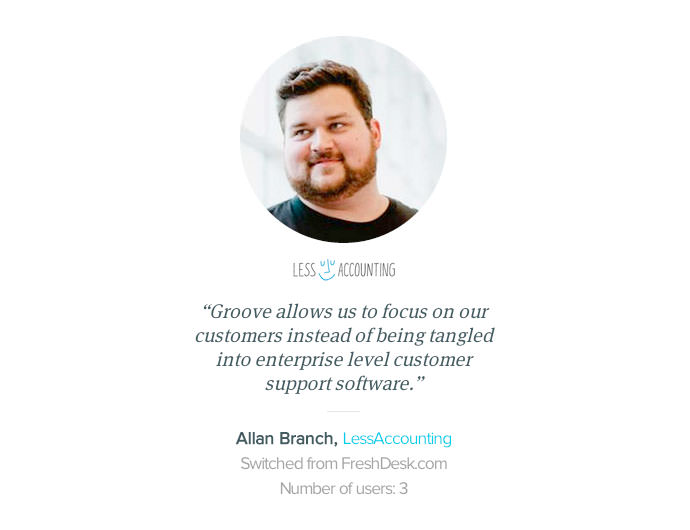
Notice how this testimonial is legitimate — a guy with a name and a face. It’s detailed. It’s specific. It’s relevant. He’s a former FreshDesk customer who has 3 users. This is the kind of testimonial that will drive sales.

constant-contact-2-month-trial

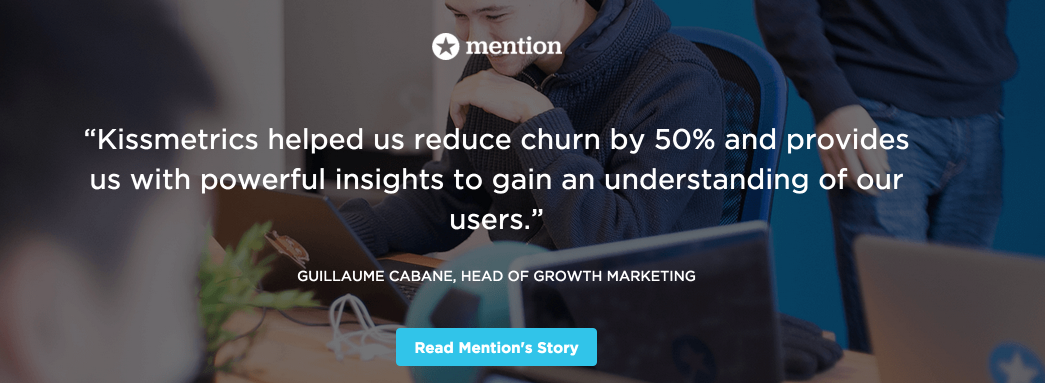
Check out this testimonial. In just a handful of words, they are improving the quality and potential pricing of the SaaS they reviewed.

mention-com-testimonial

As with any feature, you should test testimonials. Test video testimonials, the position of testimonials, the quantity of testimonials, the style of testimonials, and anything else you can test.

But keep this in mind: Testimonials will revolutionize your sales, producing a near-instant improvement in revenue.

2. Raise your price

At first glance, this seems ludicrous. Yes, raising your price is a direct form of increasing revenue, but isn’t it short-lived? Won’t existing customers bail on a high-priced product? And won’t potential customers balk at the higher price?

Not necessarily. Hear me out on the rationale for this one.

  • SaaS is defined not by its price, but by its value. As long as the software provides value greater than the price, it is worth the price. It’s called benefit experiences and it makes all the difference.
  • SaaS features are worth higher prices. SaaS is best pitched with advanced features, not just solutions. The old-school model of sales tried to sell solutions. That sales methodology does not work anymore. Today’s savvy B2B and B2C buyers already know the solution. They want features. The most appealing SaaS will be stacked with features. These features are what will tip the decision scales in favor of a purchase.
  • SaaS with higher-than-average price positions itself as higher-than-average quality. A product’s price is an indication of that product’s value. Why do you have to pay so much for a Patek Philippe watch? Because it’s a high-quality watch. Your perception of the timepiece is dependent in large part on its price. But there’s a corollary feature that justifies the high-priced watch. It has brand cachet. You can steal a page from Patek’s playbook by justly demanding high prices and thereby building brand status.
  • SaaS with higher prices automatically filters out low-quality customers. Who are your best customers? They ones who stay and the ones who pay, right? SaaS success is all about cutting churn, improving retention, lowering the CAC (cost to acquire a customer), and improving the quantity acquisition. One simple way to gain the best possible customers is to bump up your prices, thereby eliminating those who won’t pay, can’t pay, and won’t stay. Boost prices, and you boost the quality of your customers.

You can improve prices without losing revenue. Will you lose customers? Maybe. But maybe those customers weren’t long-term customers anyway. You want customers who are willing and able to pay your prices.

3. Test your trial length

Ah, the length of the free trial.

Few things in SaaS are so frequently disputed yet infrequently tested as the length of the free trial. On the one hand, you have those who say “the shorter the better,” and those who insist “your free trials are way too long.”

Constant Contact offers a two-month trial!

constant-contact-2-month-trial

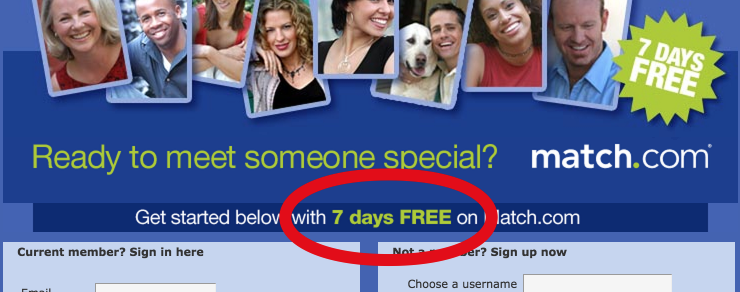
But Match.com only gives you seven days!

match-com-seven-day-trial

Who’s right and who’s wrong?

The length of a free trial all depends on the company, the niche, the customer, the product, and about 875 other factors.

What’s the right length for you? You have to test it. When you’re starting out, you may wish to go for something standard or convention — usually 14-30 days. Track metrics and test everything.

Here are some key considerations for setting a trial length. These considerations should not compel you to pick a short vs. a long one, but rather to weigh the factors as you set your initial trial duration.

  • How long do customers need to test the product? Can they test it in a few days, or do they have to run processes that can take a week or two?
  • What length of trial will help to get users engaged? One important factor in SaaS sales is engagement. The free trial is intended to initiate and sustain engagement. How long does this take?
  • Does the free trial allow users to roll directly into the full version with no interruption? If so, this has an impact on how they can continue to use the product after their trial has expired.
  • How does the length of a free trial impact the sales cycle? Is the length of your sales cycle important? Does it really impact CAC? If so, then you may wish to give some careful thought to how your free trial can enhance the sales cycle length.

Various businesses have had success with 7-day trials and 60-day trials. Your success depends on more than you can conceive of during a brainstorming session and sales meeting. You need to test.

4. More upsells

At the risk of sounding cliche, upsells are like the holy grail of SaaS marketing.

The reason why is simple: Upselling = profitability.

Check out this image:

upselling-accellerates-saas-profitability

To cut through all the colorful lines and arrows, the idea is this: Upselling/upgrades are more profitable and more rapid than other marketing methods.

Besides, upselling is easy. Try to market to a non-customer, and it’s hard. Market to an existing customer, and it’s simple. According to Marketing Metrics, it’s 50% easier to sell to existing customers than it is to new prospects.

5. Focus on retention

Retention doesn’t sound very sexy as a marketing techniques. What about hacks, guerilla tactics, and cool new moves?

Hang on a second. Retention is killer. Stop and listen to the sound of the numbers for just a minute.

Increase your customer retention by 5%, and you will improve your company’s profitability by 75%. Bam. Profit.

Both Gartner and Pareto say that 80% of your future revenue will come from 20% of your current customers.

Your initial sale process is, of course, important. But it’s incomplete. The rest of your revenue can and should come from post-initial sales.

Why? Because that’s where the money is!

This graph from David Skok shows that 5-30% of revenue comes from the initial sale, while 70-95% of the revenue you’ll receive from a customer comes from renewals and upsells.

If you’re trying to boost your profit, try improving your retention. You may not see the kind of killer upticks in the conventional KPIs, but you’ll definitely see an improvement in the long term.

Implement a retention plan, and you’re ready to boost your profitability.

6. Revamp your pricing page

Sales boils down to a single spot of real estate on your website: The pricing page.

If your pricing page is not well-designed, strategically laid out, and cautiously implemented, you could be losing tons of sales.

Like every other SaaS marketing strategy, the specifics of a pricing page depend on your product, customer, etc. The broad brush strokes of pricing pages, however, remain relatively stable. Here are those broad brush strokes.

Simplify your pricing plans

Some SaaS providers think that they need a different plan for every customer type and every life situation. You don’t need that many plans.

The point of creating plans isn’t to reach specific customer types as much as it is to help customers make the right choice. You get to control that choice through the way in which you design and present the pricing page. Customer type differentiation is a byproduct benefit of a well-designed pricing page.

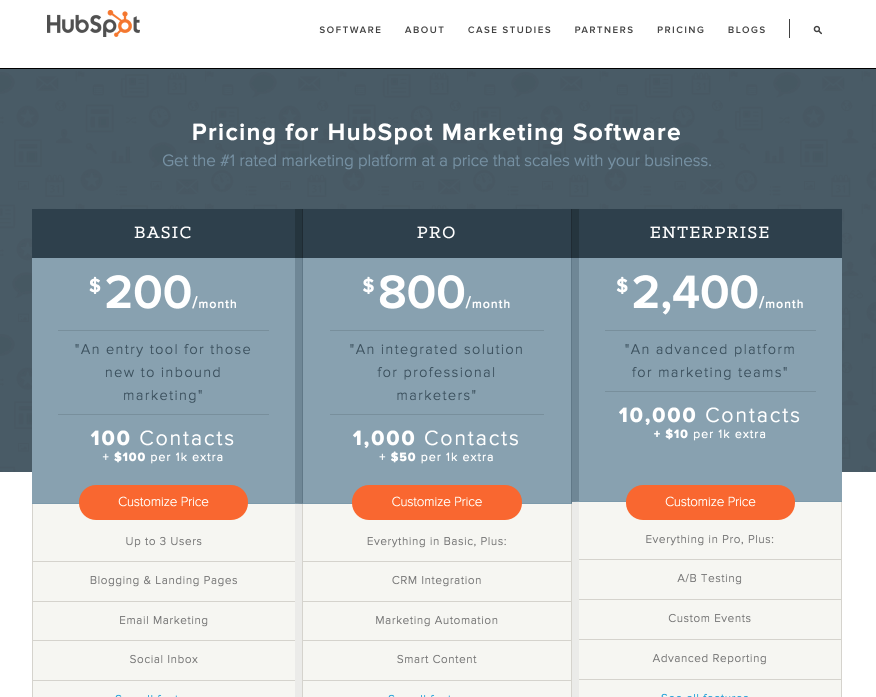
Hubspot does a great job of this. In spite of their massively differentiated market, they are able to segment it with simplicity and strategy: Just three plans.

hubspot-pricing

Tell customers which plan to choose

Here’s a moment of revelation about human nature: People want to be told what to do. And not just because Don Draper said so.

hubspot-pricing

How do you apply this bit of insight to your pricing page?

Tell people which pricing option is best, greatest value, or most popular.

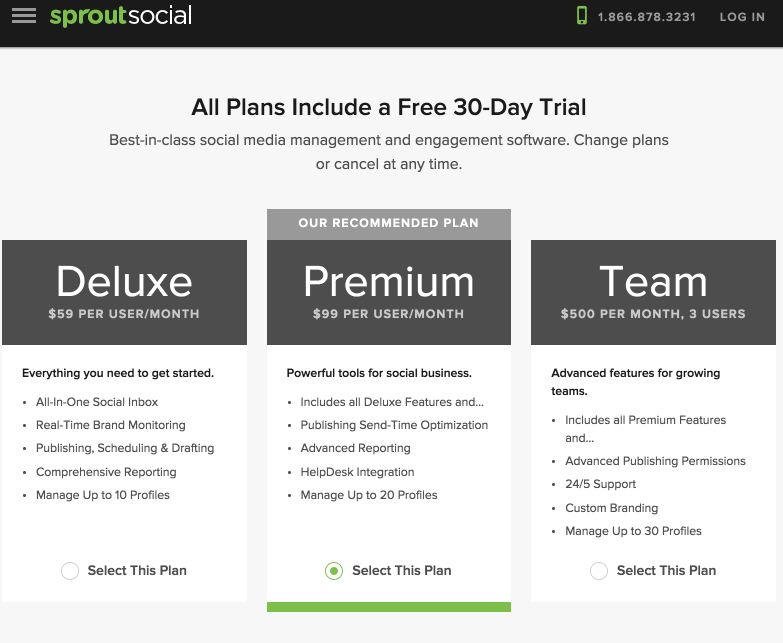
Sprout Social doesn’t beat around the bush. They tell you, this is the plan we recommend.

sprout-social-recommended-pricing-plan

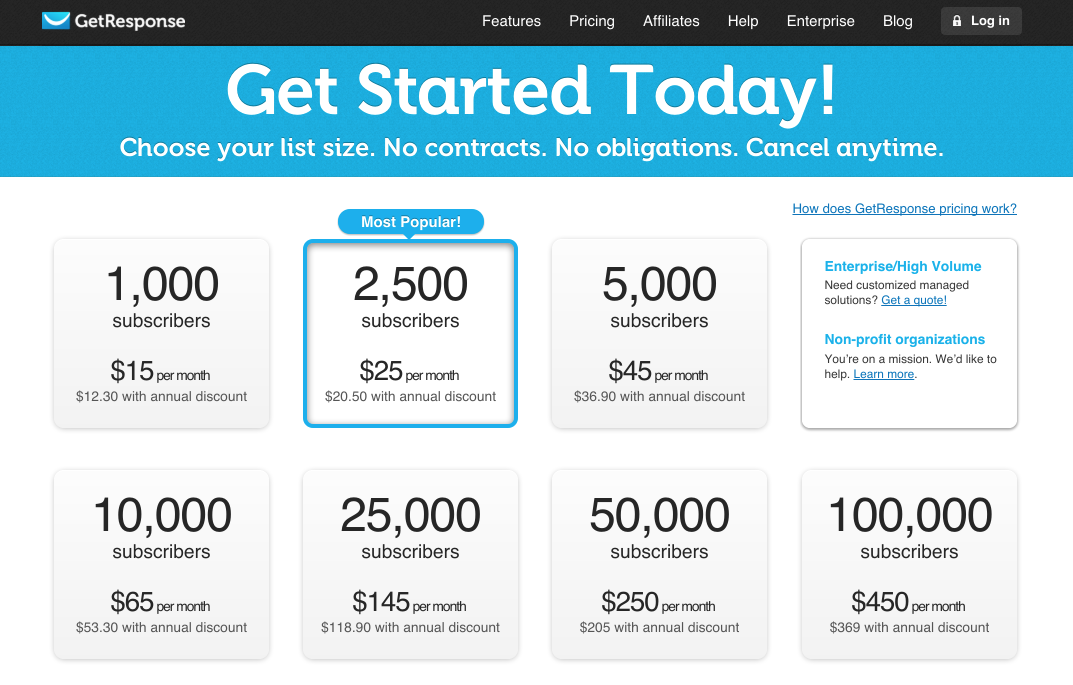
Getresponse has way too many plans, but at least they tell you which one is the most popular.

get-response-pricing-plans

Along with these two features — simplicity and recommendations — you can also apply a bit of psychology to your pricing page.

Check out this explanation of some psychological triggers that will absolutely explode sales, along with a few studies for good measure.

Conclusion

I’ll be the first to admit that SaaS marketing is a big hairy beast. It is not for the faint of heart.

But it is absolutely thrilling. It’s fast-paced, soaked with strategy, boosted by psychology, backed by research, and blown apart by the slightest shift in the market.

You’re tasked with taming this beast and making your company more money. And the only way to do that is with some sure-fire strategies that typically boost sales.

You’re looking at the cheat sheet to SaaS marketing techniques that kick revenue into the next gear. Try them, test them, and see what happens.

What’s your favorite SaaS marketing technique?

About the Author: is a lifelong evangelist of Kissmetrics and blogs at Quick Sprout.