Thursday, September 15, 2016

How Your Sales Team Can Leverage Content Marketing to Close More Leads

There's been a long-standing division between sales and marketing that's frequently discussed but few organizations have been able to resolve.


On the ground it might seem like an age-old cultural friction but a survey conducted by Demand Gen shows us this lack of alignment between sales and marketing will directly impact your bottom line.


Lamenting over the issue brings to mind sales pointing at marketing, placing blame for poor lead quality on the campaigns and activity of the marketing department.


On the flip side, marketing feel like they're generating perfectly good leads, and there's no reason a good sales team shouldn't be able to close them.


I've been on both sides of the fence, and while those sound like typical scenarios, the study from DemandGen shows that contention over leads isn't the biggest concern. The main issue is that the departments aren't talking. There's tremendous opportunity for the sales team to leverage content and resources provided by marketing. Likewise marketing can learn a lot about customers, barriers, and pain points from sales.


But that's not being effectively deployed.


Nearly half of respondents point to communication as the top issue while 43% said the problem has to do with flawed and broken processes.


Among sales teams, 37% want more lead nurturing and improved brand awareness.


Subsequently, 15% of marketing respondents are seeking better feedback on campaigns and 34% would like to see improved lead follow-up once content campaigns and inbound marketing drive those leads to the sales team.


Without strong communication between sales and marketing, it becomes far more difficult for both departments to get their needs met and achieve goals. This is because:


  • Marketing isn't providing updated audience insights

  • Sales isn't communicating new barriers among leads

  • Sales won't know what content can be used to assist with closing

  • Marketing can't generate new content for bottlenecks in the sales funnel

  • Both departments are out of sync on the buyer's journey


When you begin to close the gap between sales and marketing you'll immediately see an improvement in the data and resources that travel in both directions; sales can provide deeper insights into audience relationships and marketing can use that data to provide sales with a wealth of targeted content.


It's a mutually beneficial relationship that makes everyone's job easier.


Sales can in turn use that content to delight current customers, build relationships with leads, improve engagement, and close more deals.


Here how your sales team can add content marketing to their processes to significantly improve conversions.


Transform Sales Representative into Thought Leaders


The first, and arguably most important, step is to change the mindset about the role of sales and how they position themselves with your audience.


Traditionally, a sales rep only connects with a lead as part of the buying process and engagement revolves around passing product/service supportive information to close a sale. Filler talk doesn't really count.


Nothing about that approach is going to help close the deal unless the lead has made up their mind and they're ready to buy. In most cases the purchases you get have little to do with the sales rep because there's virtually no trust or established relationship.


You can change that by transforming sales into thought leaders.


startups-in-the-car-industry-quora
Answering questions on Quora can help a sales representative grow trust with an in individual or wider audience.


As a thought leader they're actively engaging in discussions on social channels like LinkedIn, Quora, Facebook, Twitter and even Reddit. Rather than trying to sell, they're using those social spaces to share expert information and be genuinely helpful.


leadership-article-linkedin
Posting content to LinkedIn groups can show expertise and be a source for new leads.


This goes a long way toward building trust and authority as leads see the expertise and value in what is being shared. There's also the added benefit of this social activity generating leads on its own.


How to Deploy:


  • Have sales create social profiles and join relevant groups

  • Find discussions/questions and start engaging (without promoting)

  • Connect to leads on sites like LinkedIn and other social channels

  • Engage leads directly, commenting on posts they make

  • Share company content and relevant curated content

  • Empower sales to create content through channels like LinkedIn Pulse

  • Optimize social profiles (especially LinkedIn) with rich content like videos, ebooks, high value articles and testimonials videos or customer interviews


Develop Content Based on Specific Needs


Your audience is likely to share similar pain points or problems that your product/service will solve. Beyond those primary needs, every lead is going to have individual pain points specific to their business.


By listening closely and paying attention to connections through social, sales can identify opportunities to share content specific to that unique pain point.


For example – a lead makes a post that their company may be hiring a marketing agency but they're open to expanding their in-house team if they found the right candidate – so they're putting feelers out for referrals.


In that situation, sales could source a high value white paper or article on how to select a marketing agency, or perhaps an article on the best ways to lure top talent from competitors.


If you don't see obvious opportunities like that, but you know of needs, wants, or concerns among your audience then share company content, or curate content, that will bring value to those connections.


loan-officer-content-marketing-linkedin
Don't wait for opportunities, regular share valuable content even if it's curated.


Sharing this kind of content can strengthen the relationship with your connections and keep your company front of mind for prospective customers.


How to Deploy:


  • Monitor the social activity of leads including posts and group discussions for cues on pain points and needs

  • Share company content or curate related content that can provide a solution (or path to a solution)

  • Focus on providing value and education; be helpful, not promotional

  • Share content to specific connections, and also regularly share targeted content with your entire audience as well


Team Up with Marketing


The marketing team works tirelessly to generate an endless stream of leads through inbound efforts like content marketing. Much of their efforts are based on audience research that's part data-based, part speculation.


When the communication opens up between sales and marketing your sales representatives can feed a lot of insight, such as the unique pain points and needs they discover through direct social engagement and monitoring.


As data is shared, audience segments will become more refined.


Don't just limit communication to weekly or bi-weekly meetings. Keep communication constant and flowing between departments. Slack is a great tool for this process and it even has a free option with unlimited use (but limited features compared to its premium plans.)


slack-acme-sites
Keep communication open and constant with an app like Slack


Communication and sharing data improves the relevancy of all content moving forward and gets the right content mapped to the sales funnel. Likewise, marketing can begin producing new content for your sales team to address recurring pain points they've discovered.


I once worked with a sales manager who shared his frustration over prospective wholesale customers who complained about budget struggles and the loss of customers to local competitors.


Because it was a recurring problem, and not specific to any particular region, I had our internal marketing team create a comprehensive ebook on local marketing. The sales team was able to share this resource with prospective buyers.


It strengthened buyer relationships and led to a 15% lift in lead closure for the sales team.


In one study from the Aberdeen group, companies that had better communication and alignment between sales and marketing saw a 32% increase in growth. Those still suffering a misalignment saw, on average, a 7% dip in earnings.


Sharing information is an important step in getting the right content into the hands of your sales team so they can use it effectively.


How to Deploy:


  • Schedule regular meetings so department can brief one another and share information.

  • Use tools like Slack, Hipchat, or Flow to make communication among teams more fluid. This is especially useful for quicker deployment or if structured meetings aren't preferred.

  • Make sure you're tracking content metrics to monitor the performance of new content.


Better Lead Nurturing


A lot of organizations focus their efforts on lead acquisition, creating content primarily for the top of the funnel. According to data from Content Marketing Institute's 2016 Benchmark, Budget and Trends, 85% of marketers feel that lead generation is their most important goal.


Beneath that:


  • 78% focus on lead nurturing

  • 74% believe customer retention is important


But that engagement and lead nurturing happens on the marketing side, typically via email. That still leaves around 25% of companies that don't believe lead nurturing is a priority. Their marketing stops after the top of the funnel.


The work doesn't stop at lead generation, and thinking otherwise will cost your company substantial revenue. In fact, 79% of leads generated will never convert into a sale. The biggest culprit for this poor performance?


A lack of lead nurturing.


When your sales team actively shares helpful content and nurtures the relationship you're not just increasing the velocity of a lead closure, you're greatly increasing the revenue generated by that individual lead.


Companies who excel at lead nurturing generate 50% more sales ready leads at a fraction of the cost, because nurtured leads produce, on average, a 20% increase in sales opportunities.


A nurtured lead makes 47% larger purchases than your typical lead, and with a stronger relationship that lead is likely to remain a customer for a longer period, ultimately increasing the lifetime value.


This is especially important for a SaaS business with a subscription model. As much as 95% of revenue is generated after the initial sale so it makes sense for your sales team to do everything they can – including leveraging valuable content – to nurture the leads they're working with.


revenues-from-renewals-upsells
Lead nurturing helps your team capture more revenue after the initial sale


How to Deploy:


  • Have sales reps create and manage their own email list with the support of marketing to regularly engage leads on a more personal level, rather than relying on general email blasts.

  • Source relevant content like eBooks, whitepapers, and expert discussions and send it to directly to leads; be specific about why they might find the information useful. Mention pain points.

  • Curate information on industry news, market changes, tech changes and other info that can impact your leads. Create roundup posts or emails sent to individual leads.

  • Create a process for marketing to communicate new/updated content with sales so that content can be relayed to leads as it goes live.


Become a Connector


One of the most effective ways to improve relationships and close more leads is to remember that your prospective customers have marketing needs of their own. Their company needs to produce content and improve brand visibility just like yours, and they've got their own marketing efforts to think of.


As your sales team builds connections with leads, partners, and influencers they can share those connections with other people in their network.


connectors-linkedin-messaging
Go out of your way to help your connections and provide value where you can.


In the image above my message shows that I'm paying attention to what my contact has going on. I'm also sharing helpful content and trying to connect them with other resources.


Here's another example – if your team knows that a lead is working to expand their content marketing efforts, or is interested in leveraging branded content, you can introduce them to an editor for a publication or an influencer who may be willing to provide guest blogging.


Make an effort to turn your team into connectors, and help leads hook up with influencers and other businesses that may have similarities or run parallel to one another without being competitive.


How to Deploy:


  • Introduce leads to influencers who regularly share high value content relevant to their needs or industry

  • Provide them with contacts who can help with operations, customer service and especially marketing efforts


Give Leads the Resources to Close the Deal


At some point your sales team is going to convince their lead that you have the ideal solution, and they're ready to make a purchase. If you're dealing directly with a primary decision maker, executive or owner then you've got the sale.


Unfortunately, your sales team is more than likely going to engage with someone that can't make the final decision. Once convinced, that lead then has to turn inward and get approval from their leadership.


An easy way to tackle this: create a SlideShare or presentation rich that is with data points, benefits, and insights that the prospect can use to sell an idea up the chain.


content-marketing-predictions
Premade, data-driven materials make it easier to sell your plan to decision makers.


Your sales team has the best insight into the kind of barriers at the C-suite or executive level that can stall a sale. It's critical for sales to communicate those barriers to marketing. Since that internal sale may be out of the hands of your sales team, you want your marketing team to develop high-value content that makes it easier for a lead (or sales team) to sell your solution at the executive level – like the example in the image above.


How to Deploy:


  • Have your sales and marketing teams meet regularly to discuss barriers and ways to improve selling your solution.

  • Task marketing with creating slide decks, case studies, videos, and data driven infographics that are designed to address barriers, questions, concerns, and pain points of decision makers. These are your go-to assets at time of close.

  • Ensure sales have an inventory of content assets they can lean on and know when to use them. Don't just do a content dump on every lead; providing targeted content that fits the situation at time of close.


Reinforce the Top of the Funnel


Your sales team will regularly encounter questions and concerns during the sales process. Leads will ask, “how do I…” and “how does it…” It's natural for your team to address the question and move on with the sales process.


Don't let them get away with that – every question is an opportunity to reinforce content at the top of the funnel.


When sales communicate those questions to marketing, your marketing team can quickly create new content that provides education and answers. Not only will this answer the question before it gets asked, that newly published content has the potential to generate new leads that are far more likely to close.


co-founder-linkedin-pulse-writing
Everyone from CEO's to sales reps can publish top of funnel content that builds trust and visibility for a brand.


If those questions come up again your sales team can grab the relevant content and share it with the lead, stating proudly “I'm glad you asked, I've got something that will clear that right up.”


That same content can be utilized for acquisition in social channels if your sales team comes across a prospect with a relevant concern. It's as simple as sharing that top-of-funnel content.


Go Make Those Sales


Sales teams develop a deep understanding of the buyer's journey putting them in the best position to map the most appropriate content to buyer's journey they move toward a close. When you close the gap between your sales and marketing teams and open the communication pipeline, your sales team will be able to leveraging the right content, at the right time.


It's the most effective way to build stronger relationships and develop a lasting trust with prospects – and you're guaranteed to increase the velocity and rate of lead conversions resulting in unprecedented revenue growth.


About the Author: Derek Cromwell is a HubSpot certified content marketer and founder of Thunder Bay Media. When he's not wrestling furiously with deadlines he enjoys the art of food, gaming, and being aggressively unfancy. You can read his blog for more content marketing insights and follow him on Twitter @tbaymedia.


Wednesday, September 14, 2016

How to Localize Your Marketing Campaigns to Increase Conversions

It's all local.


Despite living in a global economy, many customers only care about what's happening in their neighborhoods and cities.


Brands must connect with consumers on their playing fields. And that means understanding people's languages, cultures, and traditions.


Marketing with location at the forefront offers some remarkable benefits. According to Nieman Journalism Lab, “geo-targeted [social media] posts were 6 times more successful than posts shared globally.”


“Localization goes beyond merely having to translate website content, and it connects with consumers on a personal level, builds your brand image in a way that is both accessible and unique. In short, localization is about building trust,” writes Danyelle C. Overbo, a Smartling contributor.


Let's explore how your ecommerce business can localize to boost sales.


Why Localize?


Localization enhances the consumer experience and expands your brand reach. It gives your business an opportunity to target a new consumer group.


Research shows that “75% of consumers prefer to buy products in their native language.”


language-and-localization
Image Source


But your team can't simply copy and paste marketing campaigns. Every region has its own culture-specific behaviors.


Be careful when entering into another market. Perform extensive research. That may involve localizing your taglines and slogans.


Nokia failed miserably when launching its Lumia phone in Spanish-speaking countries. The product name is slang for “prostitute” in Spanish. As a result, the brand received negative publicity.


“Even when dealing with industries or product categories that do not seem to need localization, there is a chance that a certain element of the marketing mix may need adaptation if the product(s) will be marketed internationally,” writes Dr. Nitish Singh, a cross-cultural digital media adviser.


And it's more than just delivering the right message. Sometimes, the distribution channel may be totally different.


“[I]f you are planning to use social media, you won't want to market Russian users on Facebook, but you would rather go for VKontakte, which ranks first among the top social network sites in Russia,” says Serena Pasqualetto, an ecommerce marketing specialist.


Let the corporate marketing team establish the overall tone of your brand. They are responsible for ensuring all markets recognize your logo and likeness. Your local marketing teams should lay the foundation to earn consumer trust in the communities.


This strategy is common in the smartphone business. Since 1 in 4 users purchase their devices based on stores in their area, companies increase local mobile ad spending to target these groups.


Localize your marketing. Make the right first impression to convert your target audience.


Work With Localization Specialists


Hire people who understand your consumers' language, culture, and behaviors. Local experts will know how to effectively sell to your customers.


“Who knows a given culture better than a local? Tap into local experts, whether in the form of staff, agencies, or in-country partners, from each of your target markets. This way your team can ensure the most accurate, localized experience for users,” says Amy Rigby, a freelance writer and world traveler.


Let's just be straightforward: don't use Google Translate.


If you're venturing into another country, don't rely on language translation tools to create your marketing materials. Their algorithms usually include errors and miss the context of the intended message.


For example, idioms don't translate well from country to country. In America, when it's raining heavily, one may say: it's raining cats and dogs.


its-raining-cats-and-dogs-google-translation


We know animals aren't falling from the sky. But other cultures may be confused by this expression. So, avoid these types of phrases.


Unbounce hired Ben Harmanus to handle its German, Austrian and Swiss market (DACH). Their customers appreciated interacting with a local brand ambassador. He helped translate Unbounce's most popular content into the region's language.


unbounce-content-in-german
Image Source


Also, respect societal norms and create a cultural guide for each market. Explore beyond the general attitude of the area. Your team should analyze consumer behavior.


For instance, marketers in the United States use aggressive, sales-oriented campaigns. However, in Europe, your team may tone down the message.


More importantly, learn the laws of the area. Some regions prohibit words or phrases that are considered lewd.


Don't localize alone. Hire a specialist to get the job done right.


Diversify Your Product


Studies reveal that “65% of multinational enterprises believe localization is either important or very important for achieving higher company revenues.” Earning more sales might include changing your product.


Inc. contributor Susan Solovic writes, “Tweak your product or service so it appeals to a new group of consumers or users. If you have a 'high end' product or service, consider a less-expensive version. You need to be careful that you don't undercut yourself.”


Restaurant chains are very attentive to how they sell their products in other regions. Not only do they need to worry about the message, restaurants also must take local taste preferences into consideration.


For instance, Yum! Brands, the parent company of KFC, adapted its menu to Chinese customers. The brand offers East Dawning, a quick-service restaurant that provides authentic Chinese food served with tea.


How you package the product matters, too. Packaging often helps with brand identity and brand affinity.


Coca-Cola adapted its cans to attract Chinese buyers. This global beverage leader uses images of local celebrities and significant events to grab people's attention.


coca-cola-chinese
Image Source


Use data to change your product line for different locations. Examine website traffic, pricing patterns, social media engagement, and regional consumer habits.


“VF Corporation combines third-party geodemographic and lifestyle data with daily store-level sales data, extensive consumer research, and competitor analysis to develop localization strategies with retailers, such as Kohl's.”


Facebook understands that localization means much more than just translating:


Change your product to meet the needs of your consumer. Fit into their lifestyles.


Humanize Your Brand for Local Markets


No matter the location, your company is still marketing to humans. And people understand emotions.


“By positioning the brand behind a core mission to solve important human needs, then fulfilling on that mission with local sensitivity, brands can traverse cultural differences to provide their markets with truths that transcend language barriers,” states Chris Bolman, director of integrated marketing at Percolate.


Work with your team to develop campaigns that touch the hearts of your consumers. You must talk like the locals.


Even within America, vernacular is different from coast to coast. For example, what do you people in Minnesota call a sweetened carbonated beverage? Pop. But in Louisiana, residents normally say “coke.”


term-for-soda-used-around-united-states
Image Source


Imagery is another way to relate to the culture. Displaying photos that speak to a specific area gives customers a sense of comfort with your brand.


But be mindful of how you select your images.


Recently, North Carolina Senator Richard Burr received public backlash after showcasing his campaign ad. Instead of highlighting disadvantaged children in the state, his team used stock video of African children.


richard-burr-working-for-north-carolina


“One way to ensure that your photos are regionally relevant would be to only use photos taken by artists who live in said place,” states Janet Giesen, director of business development and APIs at Shutterstock.


“Localizing images will make you more familiar and relatable to your customers-they'll be more likely to recognize a bit of themselves (and the “human” aspects) in your brand.”


Sell to humans. Speak their dialect and highlight their culture.


Localize for Conversions


Every customer isn't experiencing life the same way. They see the world differently based on their location.


Learn how localization can benefit your brand. Hire local specialists to help your team navigate a different audience. And remember to humanize your brand.


Localize to convert.


About the Author: Shayla Price lives at the intersection of digital marketing, technology and social responsibility. Connect with her on Twitter @shaylaprice.


Tuesday, September 13, 2016

Why Your High Conversion Rate Might Backfire (And How to Avoid It)

The numbers on your graphs are up and to the right.


Conversion rates at or above industry averages.


But…


Revenue's flat. Stagnating or declining even.


The problem is that those seemingly high conversion rates are a red herring. The sheer quantity of free trials or new leads looks enticing, seducing you with the promise of big numbers getting even bigger.


But in reality, the alluring illusion is sabotaging your results.


Here's why.


Why Removing Friction isn't Always a Good Idea


As an inexperienced marketing consultant years ago, I wanted to impress a new client by going above-and-beyond our agreed upon SEO scope; throwing in some badly needed landing page updates to skyrocket AdWords conversions.


It wouldn't be that difficult. Page content was wordy and jargony. The number of form fields overwhelming.


Not to mention, we could improve the design, run a few quick iterative A/B tests, and start squeezing out more juice in no time.


Basic stuff. Common conversion rate optimization knowledge.


And yet they said no. Polite, but firm.


Why?


This business had a consultative sales process. The consumers were educated, and it was a big-ticket item that wasn't taken lightly. Their customers researched and needed a thorough education in most cases. And they had to want to purchase. Badly.


Otherwise the sale, even if it went through, wouldn't be profitable or end well for either party.


In other words, it literally doesn't matter what color the CTA button would have been in the grand scheme of things. And as a newbie, I lacked that context.


In fact, persisting with some landing page optimization tactics that are so common today, like throwing up an exit intent pop up to artificially boost lead conversion rates, would probably only do more harm than good in the long run – turning off would-be customers to get a few extra conversions fooled by impulse.


We're taught to remove friction to increase conversions. And that's true. It does. You can swiftly raise conversions 11% by removing a few form fields. Making it easier to convert, quicker, usually resulting in better numbers.


But in this case, they were right. I was wrong. (First time that's happened, I swear.)


Because many times when you use misguided tactics to increase conversion rates, you're effectively lowering the lead quality that's getting through.


When MORE Conversions LOWER Quality


Software company Moz learned this lesson first hand when analyzing who their most profitable customers were.


They looked at the number of free to paid trial conversions, taking into account how the number of website visits correlated with loyalty metrics like churn.


The findings, recounted by founder Rand Fishkin in this Whiteboard Friday, were surprising.


For example, Moz customers that converted on only the first or second website visit “tend to leave early and often”. The customer loyalty is low, with reportedly “very high churn and low retention”.


Contrast that with their best customers. The ones who're most loyal, sticking around longer to drive up that Lifetime Value of a Customer. The average is 8 website visits prior to signing up for their free trial.


And even if they visit 14-20 more times, “that loyalty keeps increasing”.


Coincidentally, similar results were just shared in another recent Moz post. This time, Wordstream founder Larry Kim shared several CRO truth bombs to separate fact from fiction when it comes to the best strategies for increasing site conversions.


As you can imagine, the results weren't what you'd expect.


They analyzed over 100,000 global companies, finding that most typically small results from A/B tests “don't persist”, typically fizzling out over time for various reasons.


We've already seen this evidence.


But the big news was the fact that a “CRO increase in quantity typically lowers quality”.


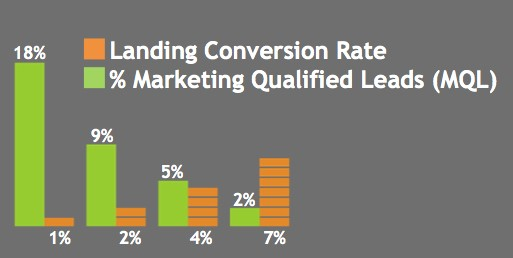
He went on to share data from a customer that shows as landing page conversions increased, the quality of Marketing Qualified Leads (you know, the peeps who're most likely gonna give you some loot) declined.


lp-conversion-rate-mql-leads
Image Source


This isn't an isolated event either.


It happens in other channels where short-term, aggressive tactics used to increase a leading indicator, only upsetting the delicate balance of each system, resulting in sacrificing long-term gains.


Take precipitously declining email results. As subscriber recency sets in, open rates gradually decline.


Who cares, right? As open rates have been notoriously unreliable for almost a decade.


email-blast-average-open-rate
Image Source


Well, it turns out, most clients and bosses do – that's who.


So to overcome, you jack up volume. Even going so far as to resend the same campaigns to people who might have not opened the initial one.


But then, unsubscribes grow. People hate too many emails, with quantity or volume being amongst the primary complaint.


So let's put it all out there.


Why do we obsess over tactical conversion rates? When the data shows, it can jeopardize the real goal (revenue)?


Here's one thought, with a few ideas for ways to overcome.


3 Ways to Increase Bottom-Line Results (And Not Just Artificially Boost Conversion Rates).


Most clients and bosses have no idea what data-driven marketers do on a daily basis.


They get in, in theory. But they don't understand it, in detail.


There's a ton of nuance behind what drives what. And without a deeper understanding of how it all works, they lack the perspective. If you lack perspective, you gravitate towards surface level, easy to understand evidence.


Like Open Rates. Or Conversion Rates. Without taking into account the context of those numbers.


That's not a knock. It's the reality of specialization. That's why you drop a car off with the mechanic and let them figure out why that funny sound happens each time you start your car.


Sometimes, doing things to increase conversion rates can backfire by ultimately decreasing real sales.


The better question, is how you should increase revenue from conversions without dangerously over-optimizing one thing at the expense of the bigger picture?


1. Value Prop Sucks? So Will Conversions


'Product' is one of the key, foundational elements of marketing. Has been for decades.


And that's because Promotion and Distribution, or the stuff commonly called 'marketing' today, is heavily dependent on it.


A poor product makes Promotion incredibly difficult. Like rolling a boulder uphill.


A good product virtually sells itself. Like a boulder gathering momentum on a descent. Journalists jump at the chance to write about it. The rabid public quenches their starvation for this new widget in their life.


The value proposition is the way you communicate the most valuable aspect of your Product to a specific audience. Like a translation in their language to match their worldview.


It's central to the MarketingExperiments' conversion sequence heuristic, combining the four critical elements of Appeal, Exclusivity, Credibility and Clarity to explain why someone needs your thing.


conversion-sequence
Image Source


And it's one of the driving forces behind which offers are the most appealing.


The conversion game changer – the ingredient most responsible for Unicorn status success – isn't changing button color but having “massively differentiated offers”.


Spend the bulk of your efforts here, focusing on how value prop changes (not page design changes) influence conversions, to get a more meaningful increase in sales.


2. (Sometimes) More Friction is Better


The source or medium that delivers people to your website can tell you a lot about which customers need more friction and which need less.


Many times it tells you their 'state of awareness'.


For example, people clicking on an AdWords link after typing in exactly what they're looking for understand they have some need, but not brand awareness at this point. So they're relatively cold, unfamiliar with who you are and why you're credible or unique.


That's OK for a simple, low-priced product or commodity purchase. That's not OK for a high-touch product or intangible service.


Sending these visitors to a short-form landing page sans navigation would tank results. Similar to the Moz example earlier, they need a chance to look around. To browse. To become familiar.


visits-source-medium-google-analytics


Additional methods such as retargeting and marketing automation can be brought into play in order to build up the necessary trust, knowledge and level of confidence in order to keep this customer around for awhile.


Now contrast that to people who've been on the receiving end of emails, social messages, and retargeting ads for a few weeks. They have had a chance to develop familiarity through retargeting ads, and trust through interacting with your other available offers.


In this case, a direct, no-BS approach that's concise might work best. In this case, the less friction, the better (generally speaking).


3. Optimize for Revenue & Sales, Not Just Conversions


In most cases, conversion tracking is technically set up properly.


A company has a rough idea of how many leads came in last month, and roughly which channels (or campaigns) drove them.


(This is bound to get a little more challenging with Google recently getting rid of converted clicks.)


how-you-count-conversions-adwords
Image Source


The problem is that outside of simple product sales, only a fraction of your leads are going to become actual customers.


Companies understand this in theory, yet still continue to make critical marketing and advertising decisions (like budget allocation) based on leads (and not customers) generated.


For example, let's say Campaign A delivers 10 leads to Campaign B's 3. At first blush, it gets priority (and money).


But how many of those leads become actual customers? What are the deal sizes or average transaction values for each? And how do those total revenue numbers for each campaign now stack up?


However factoring in the number of sales each campaign generates, not to mention total revenue, could conflict and tell a completely different story.


It also means you need a way to link actual customers (like John Smith) with revenue amounts ($5,000) against the channel or medium which delivered them (AdWords Campaign A) and the spend it took ($400).


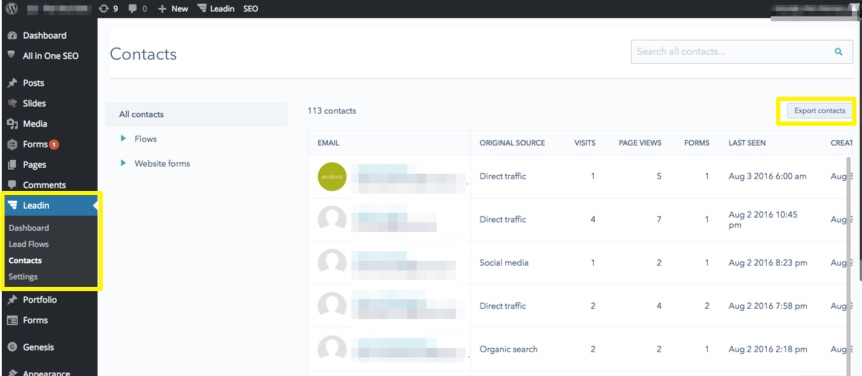
If you're not using an all-in-one CRM or marketing automation tool, try a simple free solution like LeadIn.


leadin-hubspot-on-wordpress


While you'll have to do some manual data entry (boo!) to line up form conversions with what you're seeing from other campaigns, it will help you begin to bridge the gap to discovering which marketing activities are resulting in the best ROI (yay!).


You have no business making any significant changes to a landing page until all of these other issues have been thoroughly reviewed first.


But when that happens, you can use something like the Kissmetrics A/B Test Report to see how changes might impact specific parts of your funnel. For example, you can see what impact a headline test might have (if any) on purchases.


Kissmetrics uses this on a few different steps in the funnel. For example:


  1. Initial Customer Sign Up

  2. Received Data (Customer successfully installed the JavaScript.)

  3. Received Custom Data (Customer set up custom events.)


Now for all the of the tests they run, they can go beyond just the initial surface level data (i.e. Initial Customer Sign Up) and go as far down as the third step (Received Custom Data) to get the most accurate data possible.


When you have this level of granularity into your funnel, you can easily spot when one variant or test results in increased Initial Sign Ups but loses in Received Custom Data (which happens often). In those cases, you can comfortably stick with the original because you're not getting fooled by the lure of big vanity metrics.


funnel-testing-ab-test-kissmetrics-ab-test-report


Conclusion


It's tempting to wanna make big numbers go up.


Especially when it's something tactical and easy to understand like a page's conversion rate.


But that rate doesn't exist by itself.


Making it go up is easy. But doing so without sacrificing quality is hard.


If possible, start first by improving your offer, strategically adding friction or education, and setting up full funnel tracking to help you increase conversion (and revenue).


Making these changes with a deeper understanding that conversion rate increases will cascade down to lead quality will help make sure you're not sacrificing results in the process.


About the Author: Brad Smith is a founding partner at Codeless Interactive, a digital agency specializing in creating personalized customer experiences. Brad's blog also features more marketing thoughts, opinions and the occasional insight.


Monday, September 12, 2016

What Top Companies Know About Analytics (That You Don't)

Having the right kind of insights available at the right time is crucial in today's business. But some brands are taking analytics a step further by not only relying on it to make sound decisions when opportunities present themselves, but making it the absolute core of every impactful business decision.


And their analysis isn't limited to one type of data. Rather, a study by Salesforce determined that top performers who made analytics their main focus looked at an average of 17 different kinds of data.


So what other things separate the top brands from under-achievers, and how can you make sure your own company is leveraging every possible facet of analytics to the fullest? Read on for all the details.


Analytics is Not a Magic Pill


First off, simply taking steps to understand your analytics and making solid decisions based on them is not going to instantly catapult you to the top of your industry. There are still many, many pain points strongly felt by executive decision-makers. There's simply too much data coming in too fast, among other things:


analytics-pain-pointsThe Salesforce report details common issues with data and analytics


Fortunately, businesses on the cutting edge understand that having the right tools and technology to analyze the data they're given is a smart strategy, which is why top performers have indicated increasing their analytics-related marketing spend by 50% over the next two years. It's worth noting that they are over six times more likely to invest heavily in analytics tools, training and people than their more lackluster performing counterparts.


Analytics is the Fuel that Drives Exponential Growth


And what's more, analytics is quickly becoming the de-facto driver behind a wide range of business decisions – well beyond the website:


analytics-effectAnalytics can be used well beyond improving a website


When analytics is used to improve procedures and processes across the board – from collaboration to developing new products and enhancing current ones, there's virtually no limit to the company's growth.


In addition, top performers are more likely to react in a timely manner based on the insights they receive from their analytics. They follow a predictable pattern of drawing details from all types of data, including (but not limited to):


  • Emails

  • Transactional information

  • Log files

  • Social media

  • Partner data

  • And much more


And many of these high-performing teams aren't leaving mobile analytics out in the cold either. Although still in its infancy compared to broader analytical applications, mobile analytics adoption is growing just as quickly as mobile adoption itself, and companies who know how to put this data to work are out-maneuvering the competition. Top performing companies are 3.5x more likely to put this information to good use.


Creating an Analytics-Based Company Culture


Perhaps the biggest and most telling difference between top performing companies and their lagging counterparts isn't just in how many different ways they use analytical data, or what data sources they pull from, but their entire approach to the concept of analytics as a whole.


The best performing teams have their entire executive team embracing the use of analytics as part of the company culture and not just a one-off thing managed by a handful of “marketing people”.


executive-buyinTop-level executives understand the need for analytics for everyone - not just a select few


But it's no longer enough to have the support of the C-suite to make analytics work for the entire company. Because of their technical nature, analyzing the data can seem overwhelming and at times unpredictable. But by putting reliable information in the hands of every employee, even more insights, ideas and strategies can be discovered and implemented.


Democratizing the whole analytics process paves the way forward for a truly data-driven company. And as noted in the study, top performers are fifteen, yes, fifteen times more likely to collaborate with other members and roles within their organization to help better organize and glean important actionable strategies and concepts.


That one difference in itself is enough to separate the truly data-driven from those that are struggling to wrap their heads around this whole “analytics thing.”


Embracing New Technology (Even if It's Still Not Proven)


Companies who stand to gain the most from analytics are also not averse to trying out new analytics tools. Both predictive (what will the user do based on their past behavior?) and prescriptive (what actions should we take based on the information we've gathered?) tools are included in the survey:


predictive-prescriptive


And of course, there are a lot of tools and technologies out there, including some that are just starting to tap into the potential of unstructured data – which is information that can't be organized or neatly fit into the company's pre-arranged data sets. This is where forward-thinking companies believe their customer behavior gold nuggets are to be found – which is why they're not shy about testing the waters with emergent technologies.


They'll either prove themselves in time, or they won't – but how can you know if you don't test?


So what really seals the deal for these companies when it comes to adopting new analytics technologies or solutions? How do they determine which choices are worth investigating and which might not be the best fit? As it turns out, their priority system looks like this:


analytics-tools
A list of the must-have features top companies consider when evaluating analytics tools and technologies


Circling back around to the main points that differentiate them, top companies understandably want something that makes itself useful right from the start; something that employees and the more technologically-inclined can hit the ground running with. Something that lets them plunge right in and start making sense of the data they're collecting. Bonus points if it's mobile or cloud-based.


The Bottom Line in Becoming a Smarter Data-Driven Company


As you can see, it's not just a matter of being able to “read the numbers” that drives top performing companies. It's a full-on embrace and integration of everything analytics offers – from customer preferences to making processes and procedures more efficient. Analytics used in this way tends to have a ripple effect on companies – rather than being some kind of novelty that's stacked away in a silo, it's growing into its own as a formidable growth and revenue driver.


Not only that, but when done right, analytics drives the kind of collaboration that gets people thinking about continuous and measurable improvement. And all of these traits are what makes an industry top performer.


What are your thoughts? Do you feel like you have an analytics-centered culture at your company? Do you embrace new analytics technology or have a more cautious approach? Tell us your experience in the comments below!


About the Author: Sherice Jacob helps business owners improve website design and increase conversion rates through compelling copywriting, user-friendly design and smart analytics analysis. Learn more at iElectrify.com and download your free web copy tune-up and conversion checklist today!